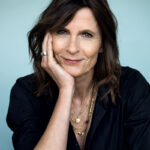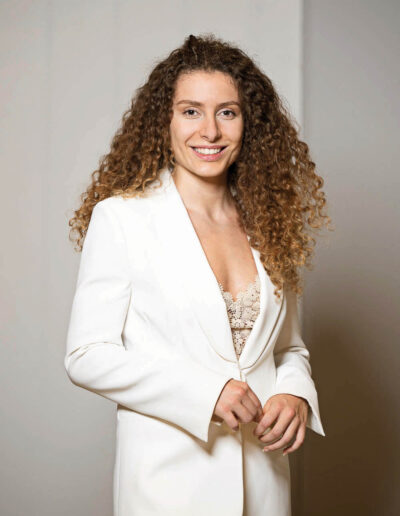

Unfortunately, the co-founder of HeroSupport was unable to attend the ceremony in person, but she joined the evening via video message. It was a true joy to meet her personally shortly afterwards. Her start-up is a genuine change-maker, and we can hardly wait to see it thrive even further.
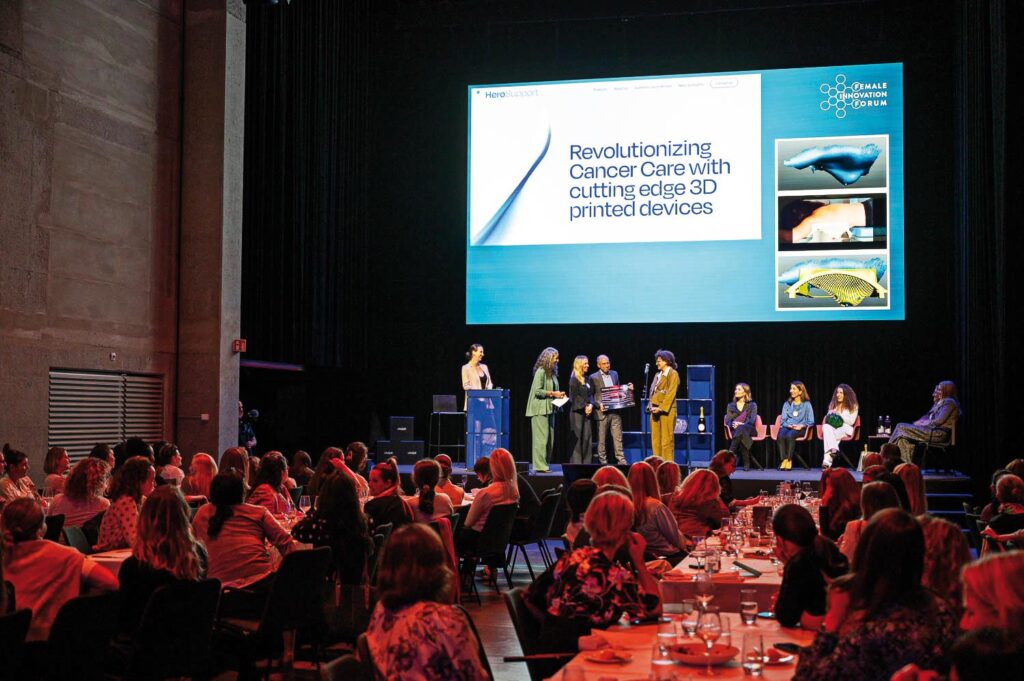
HeroSupport transforms imaging and treatment tables into personalised patient supports. If you have ever undergone a mammography – or if you are, or have been, dealing with breast cancer and the associated imaging or treatments – you are likely familiar with the uncomfortable positions and manipulations required to obtain accurate results. Giovanna Dipasquale is on a mission to fundamentally improve this experience across all procedures related to breast health.
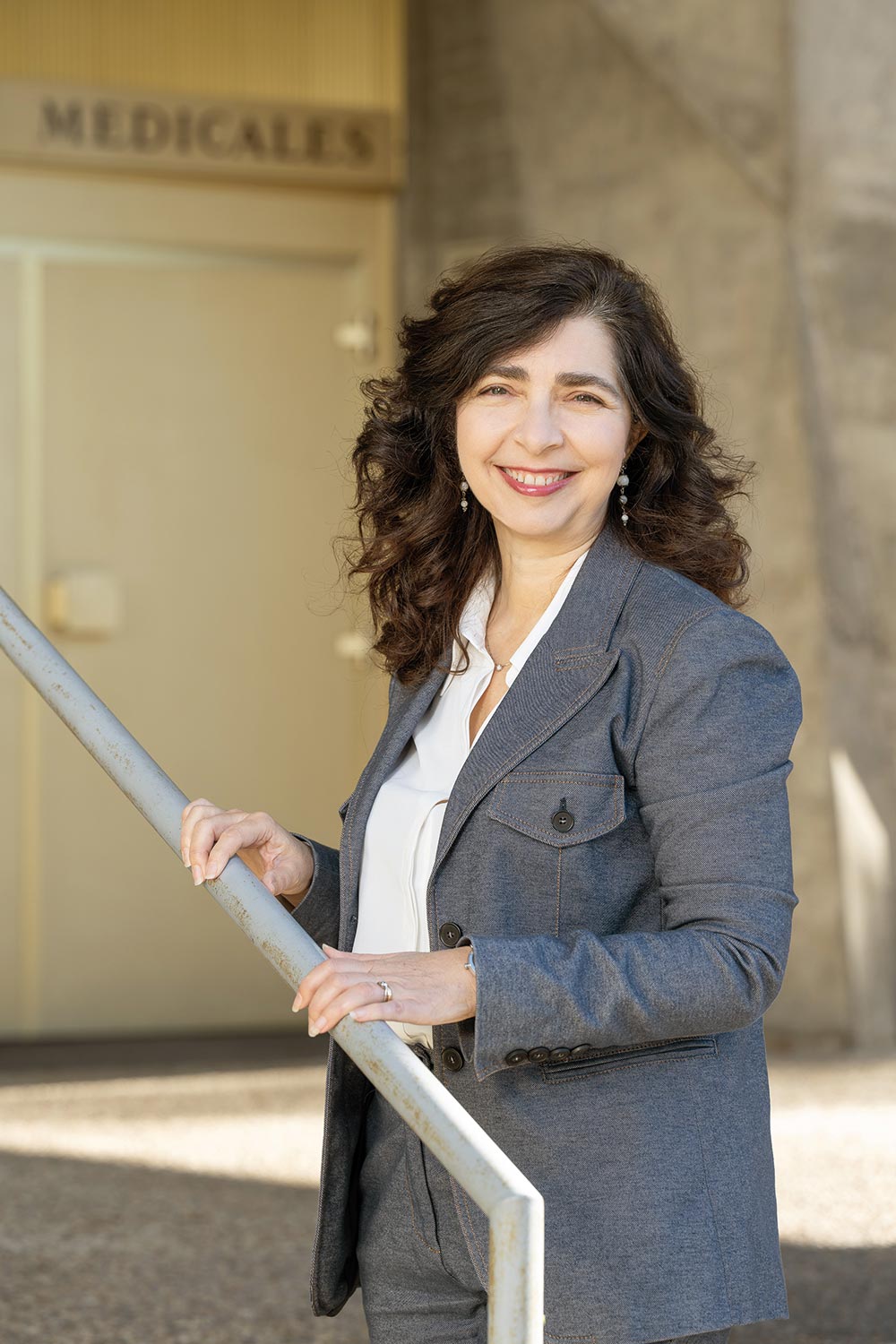
We meet the 54-year-old medical physicist, specialised in radiotherapy, in an Italian restaurant at Zurich’s main station – a brief stopover between two appointments. She had called earlier to apologise: she hadn’t been feeling well and had missed her first train. Still, she arrives cheerful and energetic. Giovanna is clearly still in awe of having won the Innovator of the Year Award 2025 and apologises once again for not being present that evening.
“HeroSupport had been accepted at an important event organised by the European Society of Radiotherapy and Oncology (ESTRO),” she explains. “We were in Toulouse, participating in a workshop with major companies and discussing 3D printing.” HeroSupport develops a 3D-printed, patient-specific immobilisation device that positions the breast optimally for both treatment and imaging. The company has also designed a matching imaging table that enables precise scanning of the breast. These scans are then used to produce the customised support device via 3D printing.
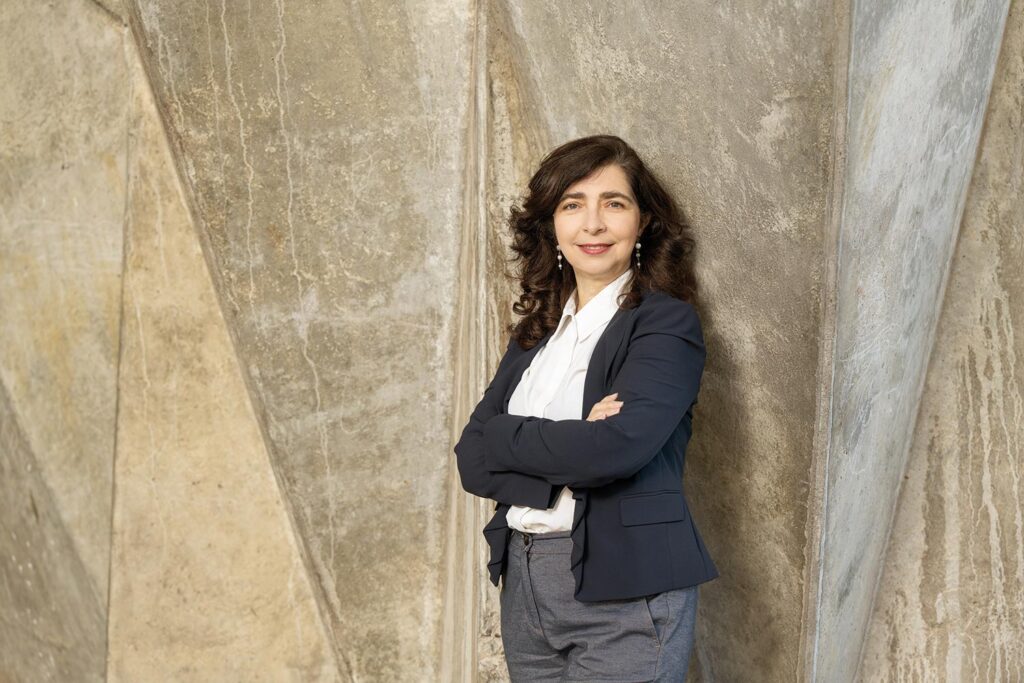
Ladies Drive: Giovanna, how did you come up with such a formidable – and, in hindsight, quite logical – idea?
Giovanna Dipasquale: I worked as a medical physicist at Geneva University Hospital for 21 years. I have always been very curious and hands-on. At some point, I was involved in a project treating breast cancer patients lying face down, in the prone position. The standard approach, however, is to have patients lie on their backs, partially undressed, with their arms raised – almost like a gesture of surrender, very exposed. I am also an expert in brain radiosurgery. In that field, we always use MRI images to precisely define where the tumour is – or was – even in benign cases. This allows for extremely accurate targeting. With breast cancer, however, tumours are often not very visible on CT scans, which are our basic diagnostic tool. Yet in diagnostics, MRI images are frequently taken in the prone position, because that is where tumours can be identified most clearly. The problem is that treatment is carried out with the patient lying on her back, where the breast is flattened. As a result, we cannot use the MRI images directly. With larger breasts especially, the tissue can shift towards the armpit, making it almost impossible to avoid irradiating the heart and lungs. There is extensive literature on this issue, including studies we published ourselves. We once had a project treating patients lying face down on a table with cut-outs for the breasts. I could clearly see the advantages of this position – but also its complexity. Asking a woman to place her breast in exactly the same position every single time was extremely difficult. Patients complained about discomfort and pressure. Technicians struggled with constant adjustments – pulling here, repositioning there. Eventually, the method fell out of use; even Geneva stopped using it. And I thought: if I ever have breast cancer, this is how I want to be treated.
But you didn’t have breast cancer …
No. At the time, I was working on another project funded by the Fondation Privée des HUG. We had received a surface scanner and a 3D printer for a different purpose. That’s when we thought: why not try to create a 3D-printed immobilisation device? Traditionally, we use thermoplastic materials that are heated, moulded directly on the patient, and then left to harden. But you can’t do that on the breast. Breast tissue is flexible, and moulding it directly can be uncomfortable, difficult, or you could even trap it. So we started experimenting. We tested, we failed, we tried again. It took time to understand what would work – but eventually it did.
What fascinates you most about your vocation?
An academic career never fully suited me. I like research, but I don’t enjoy writing papers, even when they get published. For me, the real joy lies in preparation, discovery, and problem-solving.
You didn’t follow a straight academic path, did you?
No. My father was Sicilian, my mother from near Naples, but I was born in Zambia, in Africa. I moved to Italy when I was around ten. I started school in Sicily and later studied in Pisa. There, I joined a medical physics group and chose a clinical specialty instead of pursuing a PhD after my Master’s in Physics. We worked with CERN on a project called Medipix, which was very successful. That’s also how I met my husband – he’s Dutch and was doing a postdoc at CERN. I came to Switzerland to get to know him better, thinking, at worst, I’ll learn French. I soon realised that I enjoyed working in a clinical environment and eventually found a position in Geneva.
What matters most to you in life?
I have two children, still young – 18 and 15. I had them later in life. Many friends told me I was crazy to run a start-up while having a stable job, two children, and my husband working with me in the company. In my professional life, I’ve seen many people lose their lives. I’ve seen people with dreams they never had the chance to fulfil. For me, the most important thing in life is love – love for nature, love for your work, love for people. Love is the only truly positive driving force we have. I’m Catholic, and for me, God is a God of love who teaches us to love: to love ourselves, the people around us, and what we do. I couldn’t imagine doing a job I don’t believe in.
With everything happening in the world today, don’t you ever lose faith?
No. You can only do the best you can. I often think about what we’re leaving to our children. Lately, plastic really upsets me. I remember flying as a child – there were real glasses, not plastic cups. Food wasn’t individually wrapped in layers of packaging. Today, everything is disposable. You open it, don’t like it, and throw it away. I keep thinking: what simple invention could change this? Like the coin system for shopping carts – it wasn’t complicated, just smart. Sometimes it’s the simplest idea that makes the biggest difference.
You clearly see yourself as a problem-solver. How do you deal with setbacks?
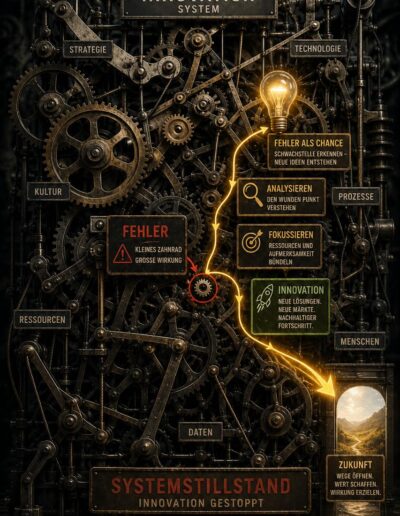
You try to understand why something doesn’t work. There’s always a reason. I never see failure as failure – it’s a way forward. I try to focus on the positive. Today, for example, I missed my train by one minute – for the first time ever. I was upset. But then I ran into a friend I hadn’t seen in two years, and we had ten minutes to talk. Sometimes things happen for a reason. Life has taught me that what seems terrible today may later reveal itself as something positive.
You were very open this morning about not feeling well and missing your train. Is vulnerability something you’ve learned over time?
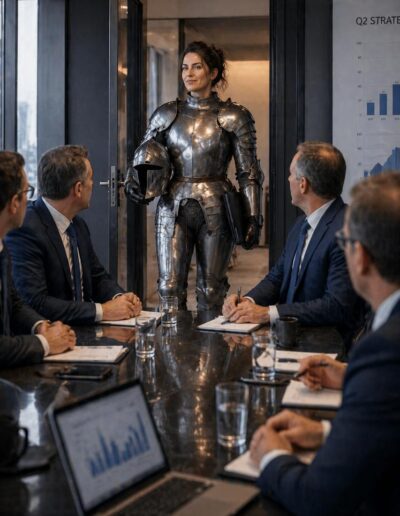
I think honesty has always been part of my character. But I’ve also learned that sometimes you need a bit of armour. Kindness is often mistaken for weakness, especially by men. At some point, you have to decide: is it more important to stay open and connect with people, or to protect yourself and miss those connections?
What is your greatest personal strength?
Over time, I’ve learned to stay calm under pressure. In complex or stressful situations, when everyone else panics, I can remain composed and think clearly. Not emotionless – but able to step back and look at the problem from the outside.
How important are awards like the Innovator of the Year 2025 to you?
I was truly surprised – first to be nominated, then to be selected. It matters in the moment, but I move on quickly to the next task. I can’t sit on an award. I never see it as something purely personal; it’s about the project. Maybe I also have a bit of impostor syndrome – I tend to attribute success to chance.
What’s next for HeroSupport?
We want to start commercialisation in Switzerland and across Europe. Once the product is established on the market, I’ll start thinking about the next one.
Which will be …
Helping children. I want to work on treatments for paediatric cancer. A close friend of mine lost her four-year-old child to a tumour. I’ll never forget that. I still don’t know how she managed to go on with her life.
Where does HeroSupport stand today?
We closed a small round at the end of 2025 and are now fundraising again – this time for a larger amount – to start marketing and scale-up. First customers, distribution agreements, and international clinical trials are all milestones planned for 2026.
Any advice for women starting a start-up today – something you would have done differently?
If you had asked me a year ago, I probably would have said no. It’s always easier to see things in hindsight. I tend to focus more on today and tomorrow. But one realisation stands out: there are two paths to starting a company. One is to start small and grow cautiously. The other is to raise all the money you need for two or three years upfront, and then focus entirely on the work. Selling a dream can actually be easier than selling a finished product. I hadn’t realised how much funding you can raise without a product. If you have a strong idea, raise the money first. It reduces pressure enormously. And above all: build a great team.
Giovanna Dipasquale
is the co-founder of HeroSupport, a medtech start-up improving breast imaging and cancer treatment through patient-specific, 3D-printed support systems. Driven by medical expertise and deep empathy, she is redefining comfort, precision and dignity in breast health care.
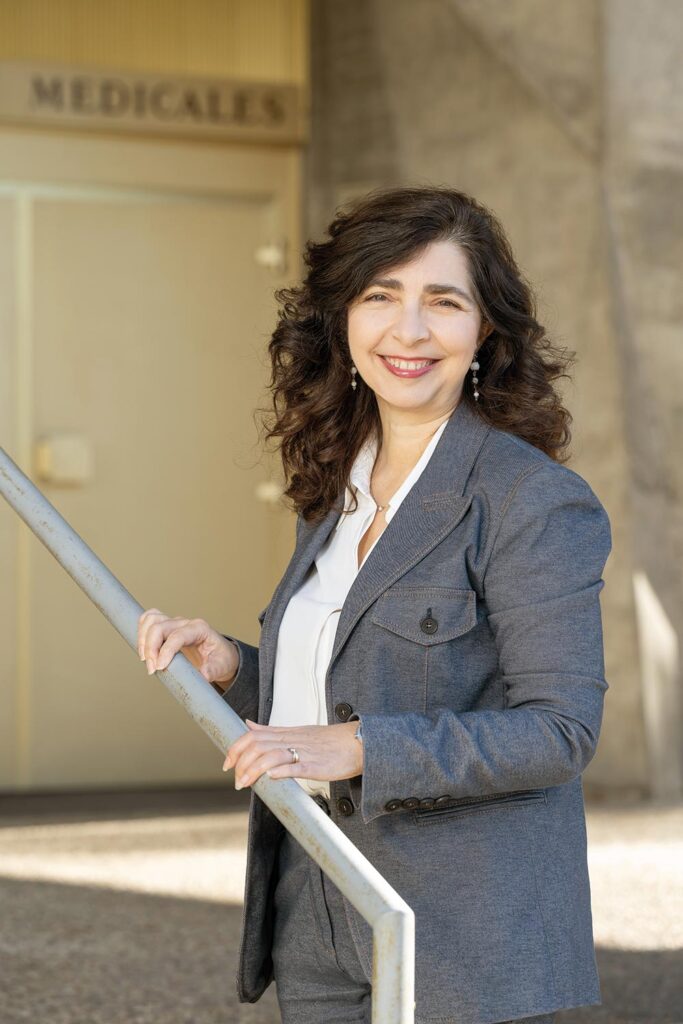
HeroSupport
develops patient-specific, 3D-printed support systems for breast imaging and cancer treatment. The innovation improves comfort, precision and safety in diagnostics and radiotherapy, while easing workflows for medical professionals. The goal: more human, accurate and effective breast cancer care.