
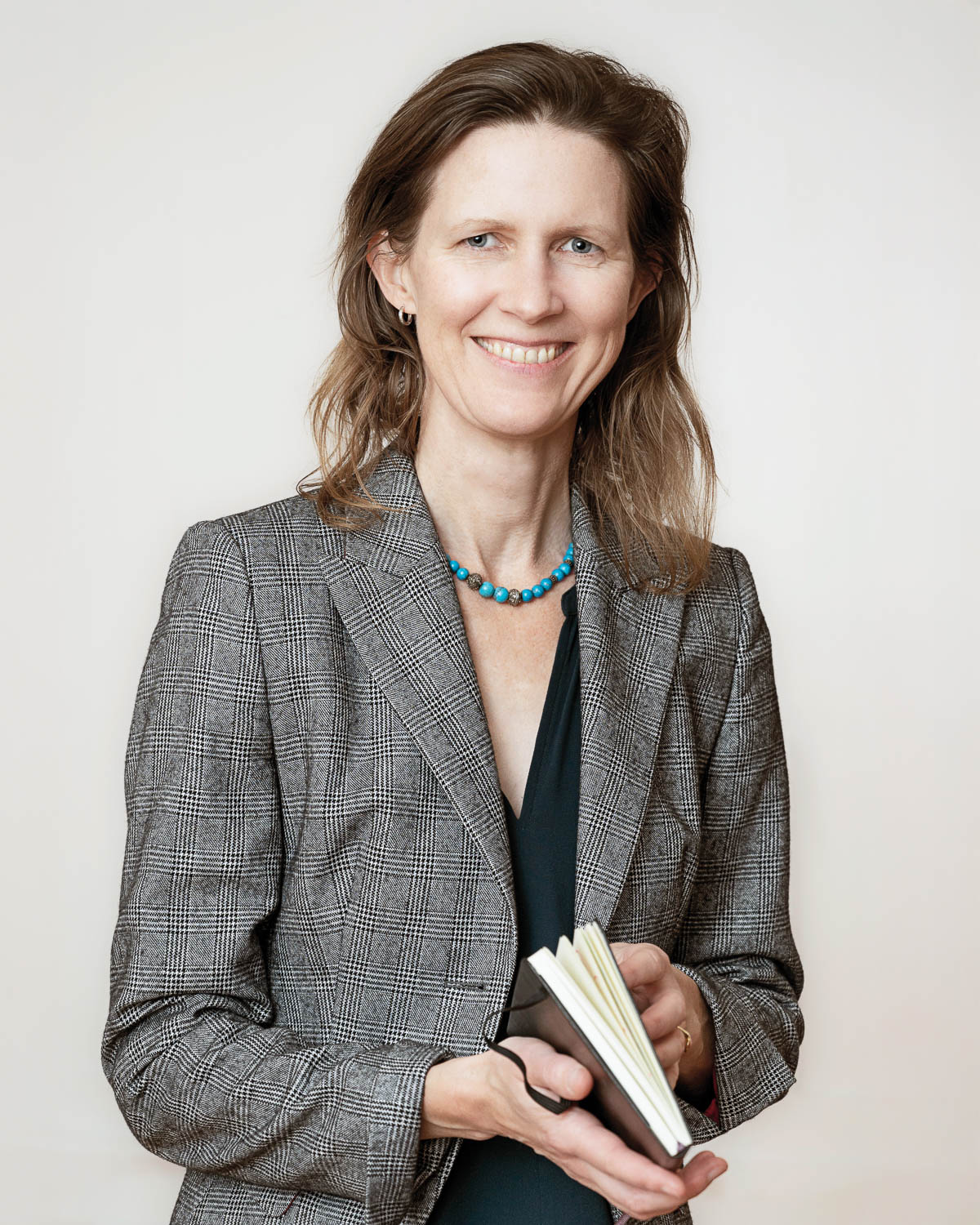

Drawing on years of experience navigating corporate and entrepreneurial worlds, she reveals why the willingness to feel – rather than defend – might be the most underrated leadership skill of our time.
Ladies Drive: Is vulnerability the ultimate strength, and have you seen this play out in practice?
Anne-Marie Deans: I once found a German definition of courage: ’Mut ist die Bereitschaft des Empfindens’ – courage is the willingness to feel. Brené Brown defines vulnerability as “the emotion we experience during times of risk, uncertainty, and emotional exposure.” Vulnerability per se isn’t strength – it’s an unavoidable part of being human. What feels like strength is the willingness to allow vulnerability rather than armouring up with defensive behaviours. To show up, be seen, and live brave. In my own life, I’ve avoided conversations to escape discomfort, yet stepping into them brought clarity and deepened connections.
There’s constant talk about authenticity in leadership, yet many professionals struggle to show vulnerability at work. Why is it so difficult to embrace something that is supposedly so valued?
It’s fitting you say “supposedly”, because there’s often a gap between talk and walk – what’s truly valued, measured, and recognised as success. A recent report looking at a large number of organisations found that only 10% truly valued both profit and people development. These were also the most successful in the long run. From an individual perspective, there’s often a skills gap: as Brené Brown says, our ability to be daring leaders will never be greater than our capacity for vulnerability. But even when you have the skills, there might be a mismatch between whether showing up wholeheartedly is invited – or penalised.
Can you share a moment when choosing to be vulnerable taught you something about leadership?
Several years ago, as I considered returning to corporate work, I entered an interview process requiring an assessment centre. Before arriving, I completed tests and a questionnaire. Some questions felt invasive, raising issues of gender bias – unspecific to the role, yet deeply problematic. That stopped me in my tracks. I had to choose: answer anyway, drop out with no explanation, or pick what felt like the most vulnerable option – contacting the hiring manager to explain my refusal. I chose vulnerability. What resulted taught me a lot. I was asked to explain, and the response was a genuine thank you from the hiring manager. We forget far too often that feedback like this isn’t shared – and therefore nothing changes. I was invited to continue the process and, without a doubt, had a deeper and more connected exchange with the assessment-centre lead. We began the day talking openly about those questions, my concerns, and how they had been addressed. Speaking up matters – in small things and in big ones.
For women in leadership, vulnerability and kindness are framed as assets but have also been used to undermine women’s authority. How do you think about this tension?
Author Annette Simmons – a dear mentor and friend of mine – addresses this brilliantly in her work on the tension between women’s interest in collaborative narratives and the workplace’s focus on competitive narratives. She describes what I’ve felt for years: women often have the ability to break the glass ceiling yet choose not to, because doing so would push them out of integrity with their values and into moral distress. Her book Drinking from a Different Well explores how women’s stories change what power means in action.
How do you balance showing vulnerability with maintaining authority?
I don’t believe vulnerability and authority are in tension. If authority means being willing to make decisions, communicate with clarity, and take accountability, that’s inherently vulnerable because there’s uncertainty, risk, and emotional exposure. The question is: can we hold that vulnerability from grounded confidence, maintaining integrity and wholehearted care? Or do we armour up and disconnect into command and control? A widespread myth is that vulnerability means sharing everything. In fact, I would recommend that if you share a personal story, you do so when it’s a scar, not a wound.
Does vulnerability work if it is not embraced by the whole team?
Vulnerability is always present; the question is how much armour we use to hide it. Environment matters enormously: what leaders do, reward, and tolerate is important. That’s why it makes a difference when an entire company or team agrees on the values and behaviours they want to work by. However, I emphasise our personal freedom to decide how we want to show up. If your workplace isn’t ready, find a community, network, or friend who thinks alike.
Finally, how can leaders initiate a cultural shift towards more vulnerability?
This shift is vital – there’s tremendous uncertainty, and our core human skills are precious. As a leader, invest in your self-awareness and self-love. Within organisations, treat this shift like a long-term investment, as if it were a process-excellence programme, for instance. Understand that it takes time and has a clear return on investment. It requires long-term commitment and ongoing investment in skills – and the data shows it’s absolutely worth it.
Finally, we must question the systems businesses operate in and get bold about systems change. That will require daring leaders ready to embrace the vulnerability involved.