



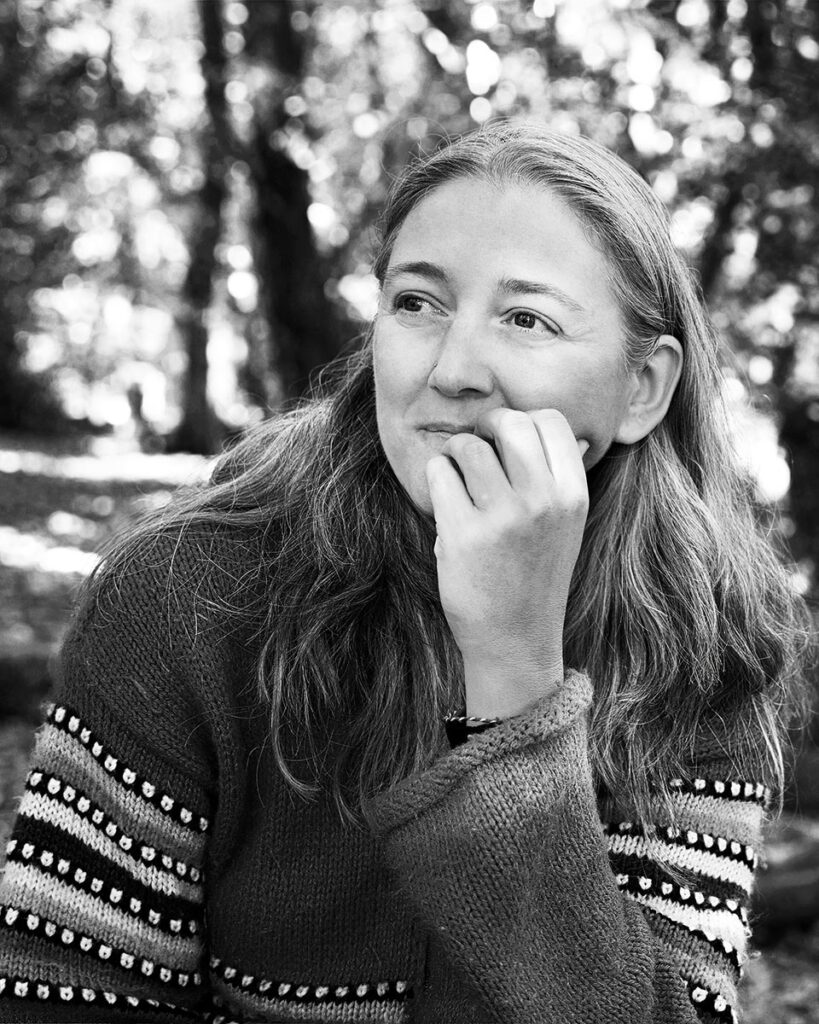
Australian evolutionary ecologist Monica Gagliano has helped redefine the frontier of biological thought. Internationally recognised as a pioneer in plant cognition and bioacoustics, she was among the first scientists to demonstrate experimentally that plants can learn, remember and respond to acoustic cues, challenging long-held assumptions that intelligence requires a brain.
Her groundbreaking work with Mimosa pudica, associative learning in pea plants, and plant sound perception helped open an entirely new field of inquiry. Through her influential book “Thus Spoke the Plant” and her research bridging Western science with Indigenous wisdom, Gagliano has reawakened a profound question: what if intelligence is not the privilege of humans and animals alone, but a property of life itself?
Long before Monica Gagliano became one of the scientists most closely associated with the still-young field of plant bioacoustics, before her research began unsettling entrenched assumptions about intelligence and perception, there was a child kneeling before a goldfish bowl in a modest apartment in industrial Italy. The encounter was so ordinary it might have been overlooked by almost anyone else, and yet so profound that one could read her entire later life within it.
When Monica recalls that, as a little girl, she could see “the universe” in her goldfish and her canary, she is not indulging in metaphor, nor retrospectively romanticising childhood intuition, but describing a mode of perception that would, decades later, become the hidden root system of her science. The story of the paper coffin she fashioned for the fish when it died – lined with cotton, prepared with a tenderness that suggested not possession but kinship – is moving not because it is sentimental, but because it reveals, in embryonic form, the philosophical orientation that would later inform her work: that life is not arranged in hierarchies of importance, but unfolds as a field of relationships in which even the smallest being may contain, as she puts it, a pulse of the universe.
“Since I was a child, I have always had this feeling of – I don’t know – there being more. I didn’t have the words, but I knew inside that there was ‘more’.”
How can an eight-year-old see the universe in a canary, in a goldfish?
“I realised that although my body looks so different from a fish or a canary or a duck, we all have a pulse. That’s what I meant when I said: I see the universe in them. For me, that means the world. Maybe that’s why I studied biology and initially became a marine scientist. I always wondered: this amazing fish with its extraordinary capabilities – who made this?”
That word – pulse – returns often when Monica speaks, and one begins to understand that what she means is not simply vitality, but a kind of shared ontological current, a living continuity that moves through fish, birds, forests, humans and perhaps through forms of intelligence we have not yet learned to recognise.
It is tempting to interpret such sensibility as poetic excess. That would miss what is so striking about Monica entirely. She has spent much of her life translating precisely such intuitions into experimental inquiry, refusing the false choice between wonder and rigour. In an era in which scientific discourse is often stripped of metaphysical curiosity, Monica’s work feels radical not because it abandons evidence, but because it asks evidence to travel further than convention has allowed.
What has made Monica Gagliano so significant is not merely that she has contributed to emerging research suggesting plants can perceive and respond in ways long underestimated, but that she has helped expose how impoverished some of our inherited definitions may be. For centuries, intelligence has largely been imagined as something distributed according to resemblance to ourselves, with human cognition functioning as an overt or covert standard. What Monica’s work quietly destabilises is not simply a biological category, but the anthropocentric scaffolding beneath it.
If plants can learn through habituation, as her experiments with Mimosa pudica suggested; if they can display associative responses, as her pea studies proposed; and if they can orient towards sound frequencies associated with water even when water itself is absent – then the question shifts. It is no longer only whether intelligence exists beyond familiar forms, but whether our concept of intelligence has been provincial all along.
Some of her specific findings remain debated within plant biology, and that is part of what makes her path so unusual: she has continued to work and to publish within scientific terrain where the ground is still moving. She speaks about these matters with a calm, almost disarming precision, and perhaps because of that calm one can miss how radical some of the implications are. When she says, with characteristic understatement, “The behaviour is there; the how is another question,” she is not merely defending a body of experiments against sceptics who object that plants have no brains. She is articulating a philosophy of inquiry in which observation is not constrained in advance by explanatory orthodoxy.
That distinction matters enormously. Some of the fiercest resistance to her work has come from deep conceptual discomfort – the unease of categories under strain. Her critics often point to the absence of neurons in plants as though this settled the matter, while she keeps returning to the possibility that distributed electrochemical signalling might perform forms of evaluation, responsiveness or memory that challenge our assumptions about what cognition must look like. In a young field, findings are tested, challenged and sometimes contested. For Monica Gagliano, neither conceptual resistance nor methodological debate should close inquiry too early; both are reasons to ask the question more carefully. Difference, in other words, need not imply deficiency; it may indicate another architecture altogether.
“We demonstrated for the first time that plants emit their own sounds – their own voice. What we also found was that these sounds are very specific frequencies. They don’t emit sound across all frequencies; they operate within very specific ranges.
When you play back certain sounds, they respond to frequencies they themselves emit – they don’t just respond to any sound, they respond to specific frequencies. And so we started considering: maybe these sounds are a form of ‘vocabulary’. I showed how plants can find the source of water based on the sound of water alone – even from a recording – and they are very efficient at that. When you start looking at plants in this way, it is not a very far step to think that someone is evaluating.”
And yet reducing Monica Gagliano to the controversies around plant intelligence would be to miss something much more compelling: namely that her science has always been inseparable from a deeper inquiry into relationship itself. Again and again in our conversation she returned not only to what plants do, but to how humans listen, how knowledge is formed, and how participation might replace domination as a civilisational posture.
Her remarkable sentence – “We are not giving voice to the world; we are listening to the world” – contains within it a quiet epistemic revolution. It overturns the assumption that humans stand outside the living world as interpreters of mute matter. What if, she asks in effect, the world has never been silent, and the failure has been ours – a failure not of information but of attention? This is why Indigenous knowledge traditions, dreams, ceremony and embodied ways of knowing appear in her thought not as decorative spiritual motifs, but as disciplined technologies of perception long excluded from legitimate discourse. When Monica Gagliano speaks of elders who ask first what one dreamt before asking what one thinks, or tells the story of being called by an ancient tree to sit beneath it, she does so without performance and without any attempt to persuade. They are offered as encounters. As experiences that widened her sense of what listening might mean.
And whether one reads them literally, symbolically or phenomenologically, they function as reminders that modernity may have mistaken forgetting for sophistication.
Monica shares a wonderful example of how relationships between elders, place, ceremony and dream operate in practice: “I just sent a message to an elder I work with in Australia, and he gifted me some clay – typical of Australia, used to paint the body for ceremonies. It’s a beautiful white, which is also a connection to spirit and the higher self. Next week I’m going to visit some elders in Botswana, and I’ll share the clay from Australia with them. It’s not poetic – it means they can then dream and, through their dreams, visit each other. That’s how the Aboriginal elder put it: ‘Share it with them, and they can feel the sand under their feet – our sand in Australia.’ Dreaming, for example, is a kind of technology in many Indigenous communities. They often ask you: What did you dream? Did you dream well?”
Connecting Indigenous ways of knowing with Western science became a mission for Monica. Not an easy one.
There is something deeply moving in the way she speaks about science not as a fortress of certainty but as a practice of vulnerability. We often narrate pioneers as figures driven by confidence. Monica describes something closer to disciplined bewilderment – a willingness to move towards questions that cannot be secured in advance.
That sensibility perhaps explains why the figure of the Fool from the tarot resonated so strongly in our earlier conversation. The sacred fool is not naïve, but courageous enough to step beyond maps. And there is perhaps something of that archetype in a scientist who risks reputation to follow phenomena many dismissed before properly examining them.
Her departure from academia belongs to that story too. When she says, “The university doesn’t make me a scientist; I am the scientist,” what one hears is not rebellion for its own sake, but liberation from structures that had begun demanding too much energy for too little truth.
There is a passage in our conversation in which Monica reflects that humans keep insisting on representing nature rather than learning methods through which the world might be heard on its own terms. I have kept returning to this, because it reaches far beyond ecology. It speaks to politics, leadership, institutions – perhaps even to the crises of imagination many people feel today.
Her emerging work – gathered under the framework she calls Field of Relation and tested through a concrete applied research platform, The Plant Wisdom Project – centres on bringing more-than-human intelligence into decision-making contexts. It may sound radical at first. Yet beneath it lies a remarkably practical question: how might we become better participants in a larger living system, rather than merely more efficient extractors from it? The question is at once ecological and ethical, scientific and existential.
What I find especially striking is that Monica Gagliano’s critique of human-centred thinking does not emerge from disdain for humanity but from a larger sense of belonging. She repeatedly resists the fashionable temptation to cast humans as a planetary mistake. On the contrary, she speaks of trees remembering us, of the more-than-human world wanting our participation even as we have forgotten how to participate well. There is generosity in that view. And responsibility. It shifts the conversation away from guilt towards reciprocity.
In a time of polycrisis, when many seek purpose as though it were a private possession to be discovered through self-optimisation, Monica’s thought offers something both older and stranger: purpose may arise less from asking what singular mission one has, and more from learning how to participate well in a much larger pattern.
Even her reflections on artificial intelligence, which surprised me in their subtlety, moved in this direction. She is fascinated by technological acceleration and yet sceptical that machine extension can answer questions of meaning, insisting that purpose is unlikely to emerge from abstraction severed from embodied life. It is a striking intervention precisely because it neither romanticises premodern purity nor indulges reactionary fears, but reminds us that meaning is lived through flesh, relation and vulnerability. Coming from someone often simplistically framed as a controversial scientist, the thought carries unusual authority.
And then there is the question of courage, without which none of this would exist. Intellectual originality is often celebrated only after resistance has faded, while the loneliness of advancing unpopular ideas remains largely invisible. Monica has known ridicule, professional aggression and the gendered undertones many women in science recognise too well. Yet what impressed me was not the story of opposition but her refusal to be defined by it. “Whenever other scientists attack me, I go back to the evidence,” she said, and in that simple response lies something almost elegant in its refusal of theatre. No martyrdom. No bitterness. Just a stubborn fidelity to inquiry.
That fidelity also explains the trust others have placed in her, including the women who supported her work when she stepped into uncertainty after leaving academia. I was struck by how much of her innovation story is, in fact, a story of belief – others recognising something before outcomes were visible. We often narrate breakthroughs through genius and overlook the relational ecologies that allow risk to survive. Yet listening to Monica, one senses how much pioneering depends not only on singular minds but on communities willing to protect fragile beginnings – webs of mutual recognition rather than heroic myths of lone achievement. There is something profoundly resonant in that, particularly for women who have often built futures in exactly this way.
As our conversation drew towards its close, I asked whether nature gives her a comfort humans cannot, and she answered immediately, “Definitely,” before laughing that she often understands plants better than people. The humour was unmistakable, yet beneath it one sensed something serious: that the living world offers forms of orientation many humans, in their abstractions and anxieties, struggle to provide one another.
Still, what stayed with me even more was her thought that all beings around us already carry stories in which we are included, while we behave as though we stand outside those stories. It is a beautiful reversal. And perhaps a devastating one. Because it suggests alienation may be less a fact than a misunderstanding. I keep returning, finally, to that child and the goldfish. Because what is most remarkable about Monica Gagliano may not be that she helped reveal unsuspected dimensions of plant life, but that she never betrayed an early perception many of us abandon in order to become sensible adults. She remained faithful to astonishment long enough to make it intellectually generative.
At a time when so much discourse is organised around optimisation, extraction and control, her work reintroduces intimacy as a serious category of thought. Not sentimentality. Intimacy as epistemology – the idea that how we relate shapes what we are able to know.
Perhaps that is why this is ultimately not only a story about a pioneering scientist, but a wider invitation. Monica Gagliano does not merely ask us to reconsider plants. She asks whether we might reconsider the living world as articulate presence, reconsider intelligence as something more distributed than we imagined, reconsider purpose as participation, and reconsider whether listening itself may be among the most radical acts available to us.
It is a profound invitation, and one that feels especially urgent now. If she is right, even partly, then the world has been speaking all along. And the future may depend less on inventing ever more sophisticated answers than on recovering forms of attention subtle enough to hear.
She knows how that sounds. She has made peace with it.
“You know, that’s exactly it: the Fool from the tarot deck is the one who goes into the unknown, but then brings back something that has not been seen before. And this is the attempt. Maybe I am a real fool. But we will see, once things develop properly, whether it was just a mad idea – or whether it is something that is going to change the world. Basically, I think it’s the second.”
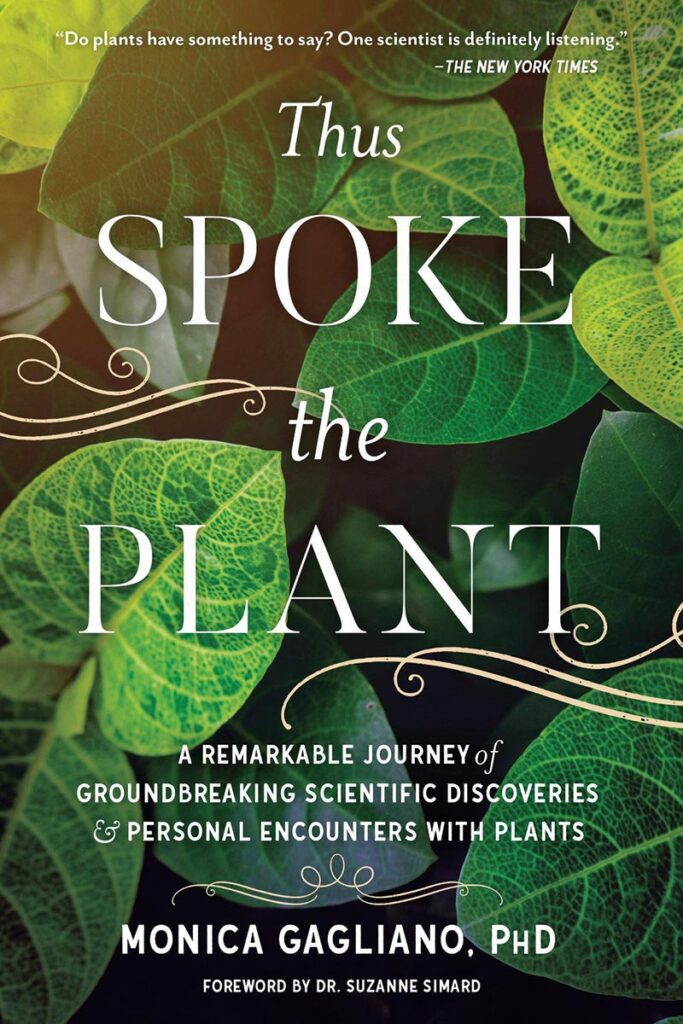
Order the book “Thus Spoke the Plant”
The book brings together Gagliano’s scientific research with personal encounters, plant teachings, Indigenous knowledge holders and mystical traditions, tracing the questions that led her beyond conventional boundaries of biological science.