
I sat across from a C-level executive. The big consulting firms had been through. A beautiful AI strategy was sitting on a shelf, and nothing had moved. I asked her what her exec team actually uses AI for. She said most of them treat it as a better search engine. Two years of strategy work, and the leadership team doesn’t own the topic. This is the pattern I keep seeing. Smart leaders, well briefed, treating AI as a thing other people implement.
It doesn’t work like that. AI is a lens. You only develop it by using the tools yourself, on your own work, until something clicks.
What does the lens look like? It’s the moment you stop asking “What can we automate?” and start asking “What becomes possible now?”
Take IKEA. Their chatbot Billie handled 47 % of the queries coming into the call centres. The obvious move was to cut staff. Instead, IKEA said something else. You know our products. You’re great with customers. We’re retraining you to become interior designers. Since 2021, they have retrained 8,500 call centre workers. Those people now staff a remote design channel that booked 1.3 billion euros in 2022 and was growing.
A leadership team without the AI lens cuts costs. A leadership team with it asks what their people are now free to become.
Most of what people believe about AI is wrong.
An AI model is a brain in a box. A very long mathematical equation with billions of parameters, with patterns of the world hidden inside, trained on a slice of the internet, licensed data, and material scored by paid humans. The humans set its judgement. Every model is different, in the same way that every human brain is different. You wouldn’t ask your data analyst to write your brand campaign, right? Pick the model that fits the work.
Because it’s a brain with patterns, it answers from what it knows. That’s its first instinct. Which means it’s not a search engine. It can search, but it decides for itself when to. Sources mean it looked something up. No sources means memory. If you want it to calculate, make it write Python and run it. It doesn’t compute an answer; it predicts one. Ask for the number and you get a prediction. Ask for the code and you get a calculation.
The brain in the box becomes powerful when you give it tools. A web search. A calculator. Access to your documents, your calendar, your inbox. The keys to your office, so it can work while you sleep. Not on day one. Trust gets earned the way it does with a new hire. The model with the right tools, context, and instructions becomes a real colleague.
People talk about training the AI to write like them, to know their business, to remember their preferences. The word makes sense as a metaphor, but it’s not what’s happening, and the difference matters.
You don’t train the model. That happened at the company that built it. What you do is build up the context it can draw on. Some of that is memory the system keeps for you. Some of it is in the chats it can search across. Some of it is in a context file you give it about who you are and how you think. Some of it is in skills: consistent instructions for tasks you do often.
If you don’t know this, you assume the AI just knows you. And you get frustrated when it doesn’t. It’s also why most AI-generated content on LinkedIn sounds like nothing. Not because the tool is bad. Because the person using it gave it nothing to work with.
Once you do know it, you work with it differently. You tell it where to look. You build memory deliberately. You give it skills for the things you do every week. That’s when the work changes.
How do you develop the lens? You build something. The first thing every leader I work with builds is their own AI chief of staff.
I did this with a new CEO. We sat down and the AI interviewed him for hours. About the business. The team he’d inherited. His priorities. What he wanted the company to be.
We captured all of it as context files. A personal constitution any AI model can pick up and run with. A second brain that knows everything about the business he can put into words. The rest is still why they call him CEO.
Now he walks into leadership meetings prepared in a way he wasn’t before. He’s shaping the agenda instead of reacting to it. His team has a CEO who comes ready to think with them, not at them. Same person, same calendar, completely different leverage.
And yet there’s a line these tools don’t cross. The lens shows you that line too.
I sat with a private equity professional. The AI analysis was brilliant, sharper than what most committees produce. The recommendation was positive.
He still had to decide. Alone. The analysis is one thing; signing the papers is another. There’s always something the data doesn’t see, and at some point a human has to sit with that uncertainty and choose anyway.
But.
It can’t be held accountable. It can’t sit with a hard decision overnight. It can’t find the courage to decide in uncertain times. And it has no sense of wonder, the thing that makes a human ask a question nobody has thought to ask yet.
AI is a brilliant executor. We are responsible for the questions and for the decisions. That’s the real division of labour. It doesn’t change as the models get better. If anything, it sharpens.
AI transformation is 90 % people, 10 % technology. The 10 % is the easy part.
The 90 % is leadership. It’s whether you, personally, have done the work to understand what these tools are, what they can do, and what they free your people up to become. If you haven’t done that work, you can’t lead the change. You can only sponsor it from a distance. People can tell.
If you’re reading this and thinking, “Yes, but I don’t have the time,” I’d push you on that. The time you spend learning to think with AI is the most valuable time on your calendar.
Try this tonight. Pour yourself a coffee or a glass of wine if it’s that kind of evening. Open Claude or ChatGPT. Spend 15 minutes asking it the question you’ve been avoiding asking yourself. About your business, your team, the decision you’ve been postponing. Don’t ask for the answer. Ask it to help you see the question.
Start there.
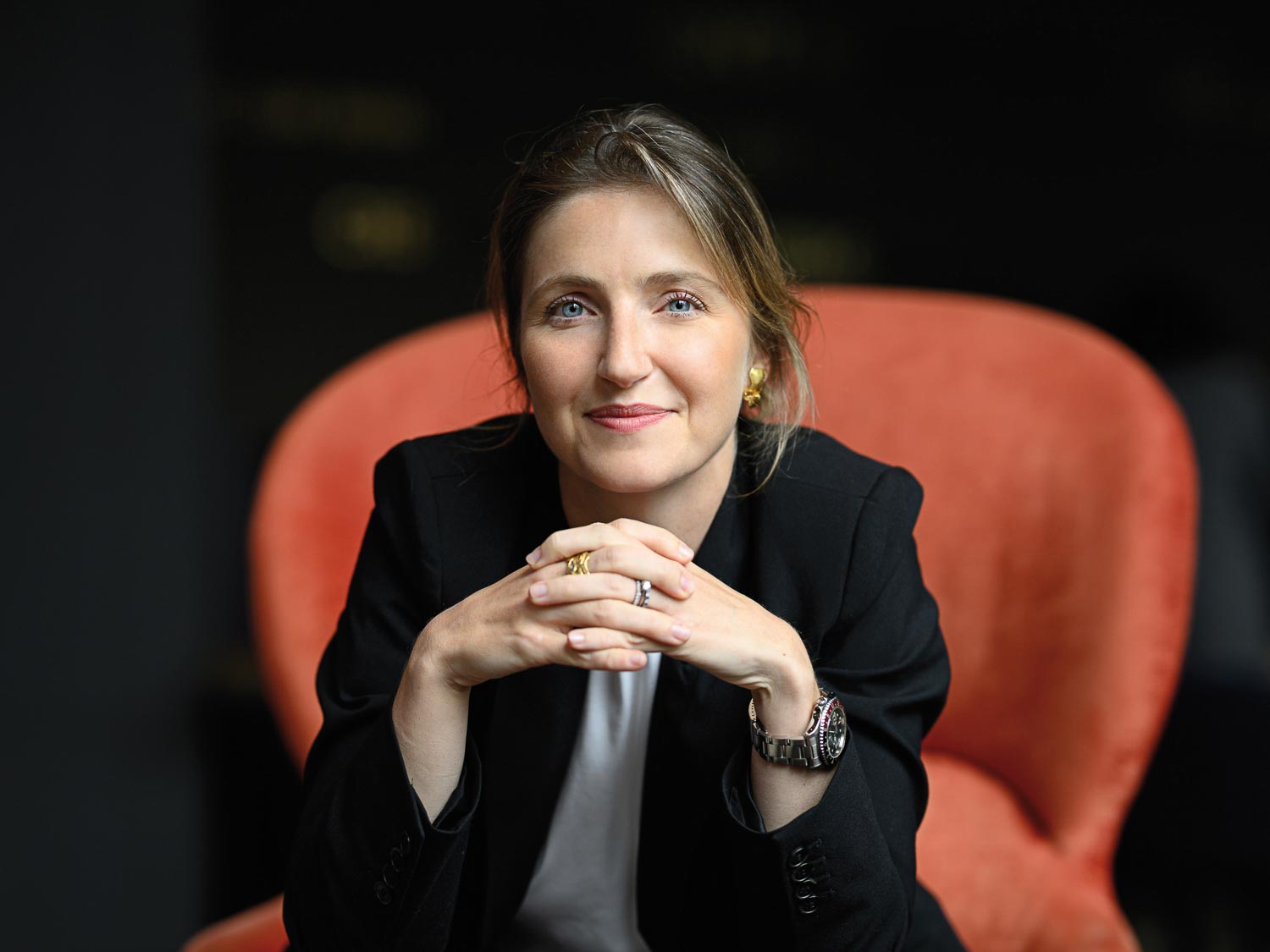
Magali Fiechter
is a friend from The League of Leading Ladies. A former partner at Simon-Kucher, she now runs NEXTWIRE.
She works embedded with CEOs and exec teams on AI transformation, and her angle is sharp: 90 % of it is leadership, 10 % is technology. If you have a leadership team that’s stuck on AI, she’s who I’d send.
www.nextwire.ai