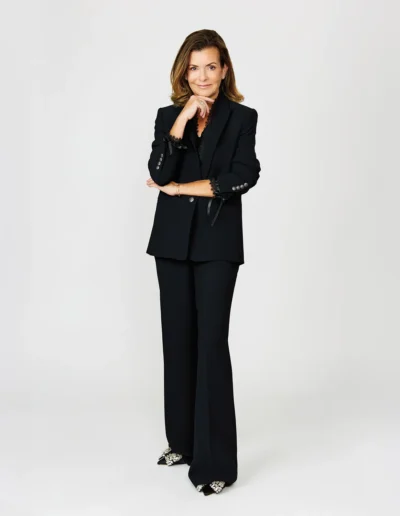

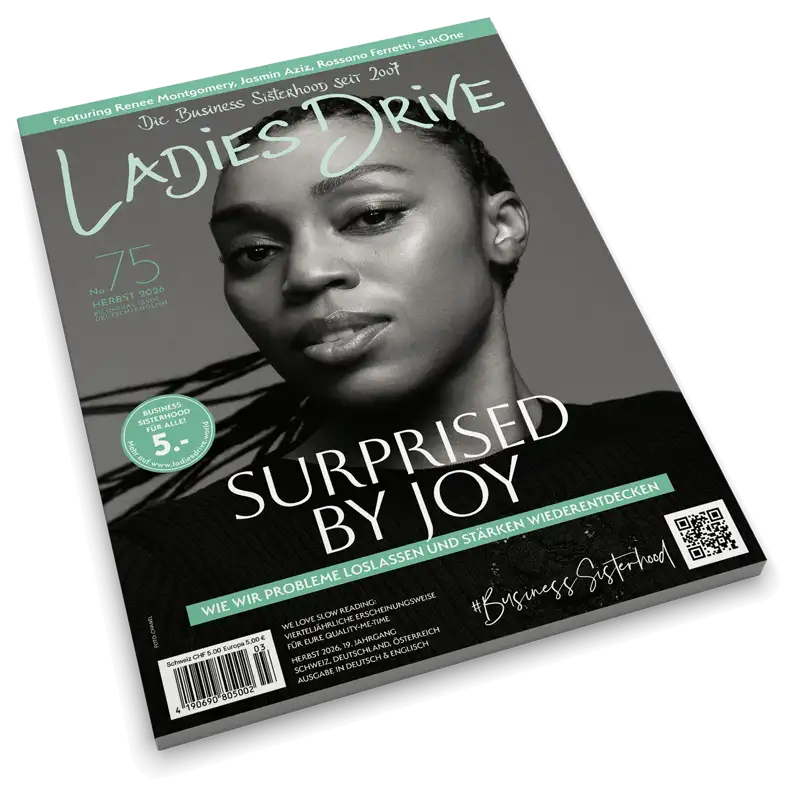
She entered commodities trading in the 1990s and built an extraordinary career in an industry dominated almost entirely by men – leading complex international trade and financing transactions, negotiating across cultures and, in 2000, founding her own company.
Alongside that career, she developed a deep interest in leadership, sustainability and the human dimensions of transformation. Today, as founder of Oriya Advisory, she works as a Private Strategic Advisor and Executive Coach, helping individuals and organisations navigate pivotal moments with greater clarity, resilience and purpose. She is also the author of “The Return of Light” and writes the Substack “Letters from Life”, exploring identity, transition and what it truly means to be seen.
Two years ago, however, life changed in the most personal and irreversible way when her long-time partner died suddenly. Grief temporarily closed the windows through which joy had once entered her life. Then an unexpected encounter reminded her that beauty can transform us – and that once joy is recognised, it begins to open one window after another.
Her work now brings together business, sustainability, leadership and the human experience, guided by a question that reaches far beyond the boardroom: what remains when profit, status and success are no longer enough?
Ladies Drive: Let me ask you my favourite opening question: what is the scent of your childhood?
Emilija Petrova: Oh, wow … honeysuckle.
Honeysuckle? Tell me more about the honeysuckle scent of your childhood.
It is funny. I was recently in Madrid, walking through a park, when suddenly I smelt it before I could see it. Instantly, I was transported back to my childhood, walking to school in Skopje. The honeysuckle was always in bloom around May. I would simply follow the scent, pick a flower and drink the tiny drop of nectar hidden inside. Finding it again after so many years felt almost magical. For a brief moment, all the different versions of myself – the little girl, the young woman and the person I am today – seemed to exist together. It reminded me that our past never really disappears. It simply waits for us to recognise it again.
You grew up in the former Yugoslavia?
Yes. I spent my childhood in Skopje until I was fourteen, when my father’s work took our family to Toronto. My father was a bank director and economist, and from an early age, I experienced different cultures, languages and ways of seeing the world. Those years shaped me profoundly. After returning to what is now North Macedonia, I completed my studies and accepted my first position with a Swiss trading company. I packed one suitcase, believing I would spend perhaps a few months in Switzerland before returning home. And here I still am today.
Your first job was already in commodities trading?
Yes, and I was immediately immersed in an international environment. We worked with steel mills, banks and industrial companies across Europe, the Middle East and beyond, financing international trade and managing complex transactions. I discovered very quickly that I loved complexity. Every day required curiosity, judgement and the ability to remain calm while everything around you was changing. I don’t think I ever consciously chose commodities. In many ways, commodities chose me. (smiling)
It sounds like a very unconventional career for a young woman at that time.
Interestingly, it didn’t feel unconventional where I grew up. I was surrounded by capable women, particularly my aunt, who became Deputy Minister and later Minister of Education in the 1970s. She showed me that women belonged at the centre of public life, not at its margins. Coming to Switzerland was different. I realised very quickly that I had entered a world where there were very few women around the negotiating table. But I never arrived thinking, “I am the only woman.” I arrived thinking, “This is fascinating. Let’s solve the problem.” Of course, I had to prove myself. My competence still had to be demonstrated. But once people experienced how I worked, gender gradually became less important than the quality of my contribution. Looking back, I think real change often happens organically. Sometimes, you don’t change a system by protesting against it. Sometimes, you change it simply by remaining true to yourself, earning respect through your competence, leading by example and making it easier for the next woman to walk through the door.
Then you joined a larger company that traded commodities worldwide.
Yes. I joined the international commodities group Newco AG, which was affiliated with Anglo American Corporation. I eventually became Head of Trade Finance, managing multimillion dollar credit facilities with banks around the world. We financed international trade in ferrous and non-ferrous metals, structuring everything from letters of credit to highly complex financing solutions. It was a fascinating world because no two days were ever the same. You learnt to make decisions in uncertainty, anticipate risk and remain calm when circumstances changed overnight. Looking back, I realise that those years shaped far more than my business career. They taught me how to think.
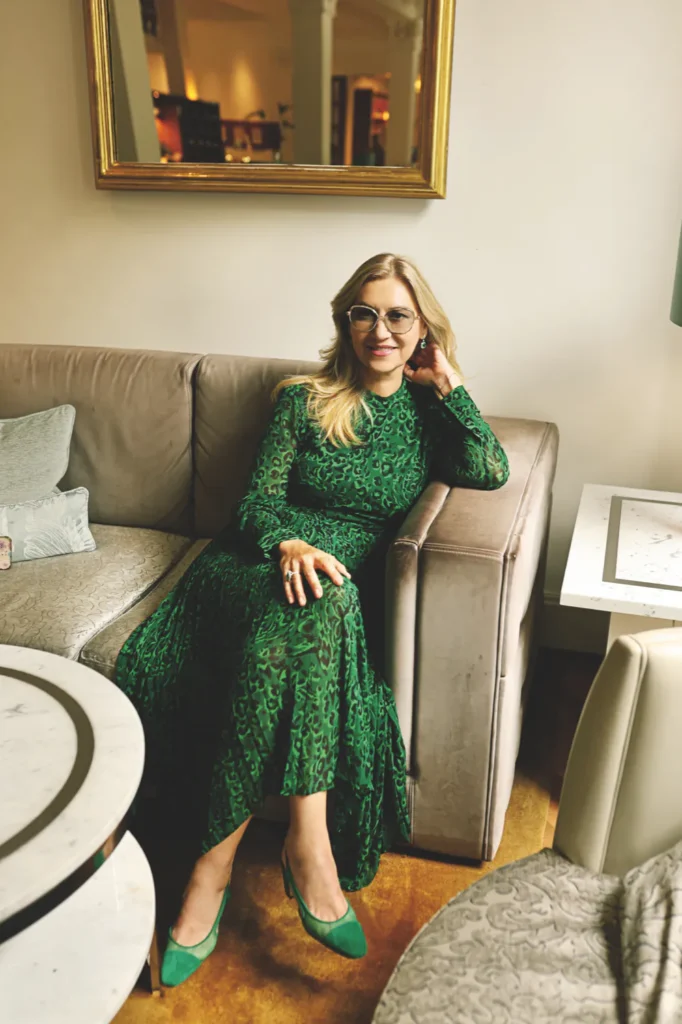
You had an extraordinary career at a very young age in a male-dominated field. You were ahead of your time.
Perhaps I was, although I never experienced it that way. I was simply curious. Curiosity has always been one of the strongest forces in my life. Later, as an entrepreneur, I remained in the commodities sector but gradually became increasingly interested in sustainability. Long before it became fashionable, I was asking a simple question: can we create value without exhausting the resources that create it? One project was particularly close to my heart. We explored producing steel from recycled scrap rather than relying primarily on virgin ore and fossil fuels. Today, we would simply call it green steel. At the time, however, the technology existed, but the mindset had not yet caught up. That experience taught me something I have never forgotten: innovation is rarely limited by technology. More often, it is limited by mindset – and by our willingness to embrace a more sustainable one.
You’ve been an entrepreneur for more than twenty-five years. What exactly did that work involve?
Much of my work focused on helping companies improve quality, efficiency and sustainability throughout their operations. I worked closely with businesses in the recycling industry, helping them rethink processes, optimise supply chains, reduce their environmental impact and create long-term value. Over time, I realised that the greatest transformation was never only operational. Lasting change always depended on the people leading it. During COVID, as supply chains were disrupted and uncertainty became the norm, I found myself asking a much deeper question: how do I want to create impact during the next chapter of my life? That became another pivotal moment. I realised that I wanted to move from transforming businesses to accompanying the people who lead them through transformation.
When you look back at your career in this male-dominated field, what was your particular strength as a woman? What new perspectives did you bring to the table?
You know, there are several aspects to it. If you are warm, approachable and confident in who you are, you already bring a different energy into the room. Before you even speak, the atmosphere changes. Women often hold complexity differently. We tend to think more long-term, we are generally more introspective, we don’t immediately focus only on profit, and we naturally bring different perspectives. That is the real benefit of having more women at the table – women who don’t feel that they have to emulate men. That is very important. Unfortunately, I have met women in senior positions who did exactly that. But when women remain true to themselves and nurture those qualities, they bring incredibly valuable perspectives to the table and contribute to better decisions. That female perspective is really important. Yet it isn’t that our way of thinking is better than men’s. What works best is bringing the two together.
Having said that, women are still heavily underrepresented and need to be more present in the public sphere, in the economy and in every kind of decision-making. People always wanted to know my point of view. They wanted to hear it, and they took it into account because it made sense. Not because they wanted to be kind. No – because it made sense.
Can I ask you about the Strait of Hormuz? Looking at the situation there now, and given your background in commodities trading, how do you assess it economically rather than politically?
These are situations I experienced often. I had vessels stranded or arrested for unexpected reasons, as well as all kinds of other complications. Anticipating risk and adapting became part of the job. That is the language of trading. What is happening in the Strait of Hormuz may be more dramatic, but it is still the kind of situation traders anticipate. It becomes part of your nervous system. Many ultimately adapt, reinvent themselves and create new business opportunities. I have seen that over and over again.
My instinct is always the same: don’t panic. Look at the situation, assess what you can do and reinvent. Yes, the first transaction may result in a loss because the change was too sudden or happened overnight and you couldn’t react. But afterwards, if you remain focused and realistic and ask yourself where the opportunities are, you can often turn it around. Politically, of course, you can get stuck. If you think about the ideology behind it and what the major powers are doing, it is daunting. But becoming paralysed doesn’t serve anybody because, at the end of the day, companies have people to support and families to feed.
The UAE, for example, is expanding its pipeline and port infrastructure around Fujairah at enormous speed to reduce its dependence on the Strait of Hormuz. Markets adapt. Infrastructure adapts. Businesses adapt. In the long term – and I know this may be difficult to say while events are still unfolding – there will be economic opportunities arising from this situation. I have no doubt about that, provided we have leaders who eventually act sensibly and look for better solutions.
There are always different forces at work. Everything depends on alliances. Oil is a highly political commodity. It drives inflation and influences so many other sectors that it is often difficult to understand which political agreements have been made around it and why. The United States is in a stronger position than many countries because it produces significant volumes of its own oil and has relied on fracking for many years. Europe, on the other hand, has gone much further in pursuing sustainability.
I still strongly believe that alternative forms of energy have to be part of our future. And as a politician, you must hedge. You value your relationships, but you also make sure you have a Plan B.
You’re consulting now. What would you tell a politician or a senior female executive working in a very male-dominated field where there is a lot of hardball being played? How can she remain connected to her femininity while playing hardball?
By cultivating and nurturing the qualities that brought her to that table – not by forsaking or betraying them. The greatest betrayal is the one you commit against yourself. When people arrive at that kind of table, fear, ego, limiting beliefs and assumptions can alter their trajectory. In coaching, we sometimes call these the “gremlins”. They make you believe that changing who you are will benefit you or make you more valuable. But the most important thing is not to be afraid of losing anything. Once you start thinking, “I have something to lose”, you actually start losing.
Being authentic and staying true to your purpose are of the highest value to me. A career can end. Perhaps in two years’ time, they will say, “Okay, we don’t want you anymore.” Then you look back and ask yourself: Did I like myself? Did I do enough? Was that really who I was? Those are the questions that occupy my mind at the moment. They are the questions I am seriously interested in. I am coaching a former CEO from the US, and I sense a certain disappointment. When you are over fifty, your career becomes something different anyway. You begin asking yourself: What is my legacy? There is also a more spiritual idea that I like: before making important decisions, consider the impact they will have on the next seven generations.
Today, you work as a Private Strategic Advisor. What does that actually mean?
It means accompanying people through pivotal moments. Sometimes, those moments are professional – a leadership transition, a strategic decision, the sale of a business or a change in direction. Sometimes, they are deeply personal – loss, identity, purpose or simply the feeling that life is asking a different question than it did ten years ago. My role is not to tell people what to do. It is to create the space, ask the right questions and help them discover the clarity that already exists within them. Because once clarity emerges, decisions become more authentic.
You just spoke about limiting beliefs. How can we overcome them?
The best way is to remain open and to listen. Listening is very important. Listen carefully and observe. Then ask yourself: is this really happening, or am I simply assuming that it is? It requires some training. It requires mindfulness, a certain level of consciousness and the desire not simply to change, but to become a better version of who you already are. And that, you know, takes some work.
There is another observation I would like to share. I have watched the behaviour of immigrants who came from countries like mine, where there were wars, border changes and periods of hyperinflation. We tend to be more resilient because we have seen and lived through these things – through our grandparents, our mothers and our own experiences. Hyperinflation teaches you something profound. You realise that money itself has no inherent value. Its value depends on trust and confidence. Once that trust is lost, everything changes. You learn what really has value – and that is you. Your resilience, your ability to reinvent yourself, your ability to continue living and to remain positive: that is your greatest capital. I think resistance to change is something that many, many years of comfort can bring about. But one of the biggest subjects occupying my mind is relational identity. Who are we through the events and the people who shape us? I find that so interesting.
Our relationships are mirrors. We experience our greatest growth through the people we meet, the friendships we nurture, the disappointments and the small betrayals. It is all part of that process, and it builds resilience. I don’t want to call it certainty; perhaps that is too strong a word. But it is faith. Faith that, no matter what happens, you will be able to overcome it. The relationships that matter and become part of your life are absolutely essential. They are beyond profit, beyond money, beyond anything else. They are pure heart, love and soul. Those three things.
Would you consider yourself a spiritual person?
Yes, definitely. Whether we look to ancient wisdom traditions, philosophy, the world’s great religions or psychology, they all seem to point towards the same centre. I think that centre is love. Whenever we are about to react or do something, the question is: what would love do? And when I say love, I mean love in its broadest sense: love for yourself, love for everything around you and love for the environment.
Spirituality, in that sense, is very important to me because it also contains this element of faith. Sometimes, it is simply the belief that certain lessons are not intended to cause you pain. They are intended to move you forward and bring you closer to a better version of yourself.
Another aspect of spirituality and relational identity that I find very important is the experience of being recognised. When somebody truly sees you – and they can only see you when their heart is open – that is the moment in which you expand. That is the moment when you feel: “Oh, I am better than I thought I was. I can do more than I thought I could.” In my opinion, that can only happen through interaction, through relational identity. I value that very deeply.
It’s beautiful to hear because many people would not dare to say this out loud in an interview. They fear that others might think they are esoteric or whatever. But in the end …
You know, some of the greatest scientists were deeply spiritual. We have a body, a mind, a spirit and, for many of us, a soul. They are all interconnected.
Emilija, I only have one final question for you. When were you last surprised by joy?
Recently, I had a beautiful encounter with another human being. We had such a wonderful exchange that, for a moment, everything else disappeared. It was a joyful moment. I came home and thought, “Wow … I am really able to feel joy again.” Funnily enough, it brought me back to Plato’s Symposium and Diotima’s reflections on beauty. When you encounter beauty and allow it to transform you, it continues to live. It lives on into the next day and changes the way you see the sun shining. The beauty you encounter in a person or a moment becomes part of you, and later you recognise it as joy. It was completely unexpected. And once again, it was a moment of recognition. When I came home, I wrote everything down because I wanted to preserve that feeling. I wanted to remember it consciously.
And then something beautiful happened. It opened more and more windows – onto more joy, more life, more curiosity and more possibility. I am deeply grateful for that.
Substack “Letters from Life”: emiliapetersletters.substack.com
Author of “The Return of Light”, published under the pen name Amy Peters: thereturnoflight.org