
Why do people spend so much time on social media? There’s no question that there is a great deal of interesting and inspirational content out there. However, it is simply the icing on the cake. To me, the search for meaning in the outside world is an illusion – and one that can easily turn into a distraction from what really matters: discovering who we truly are and why we are here.
Consider the age-old question inspired by the French philosopher Pierre Teilhard de Chardin: are we human beings having a spiritual experience, or spiritual beings having a human experience? The answer can be found within each of us. Once we find it, there is no turning back, and life takes on new meaning.
MINDLESS OR PURPOSEFUL SCROLLING?
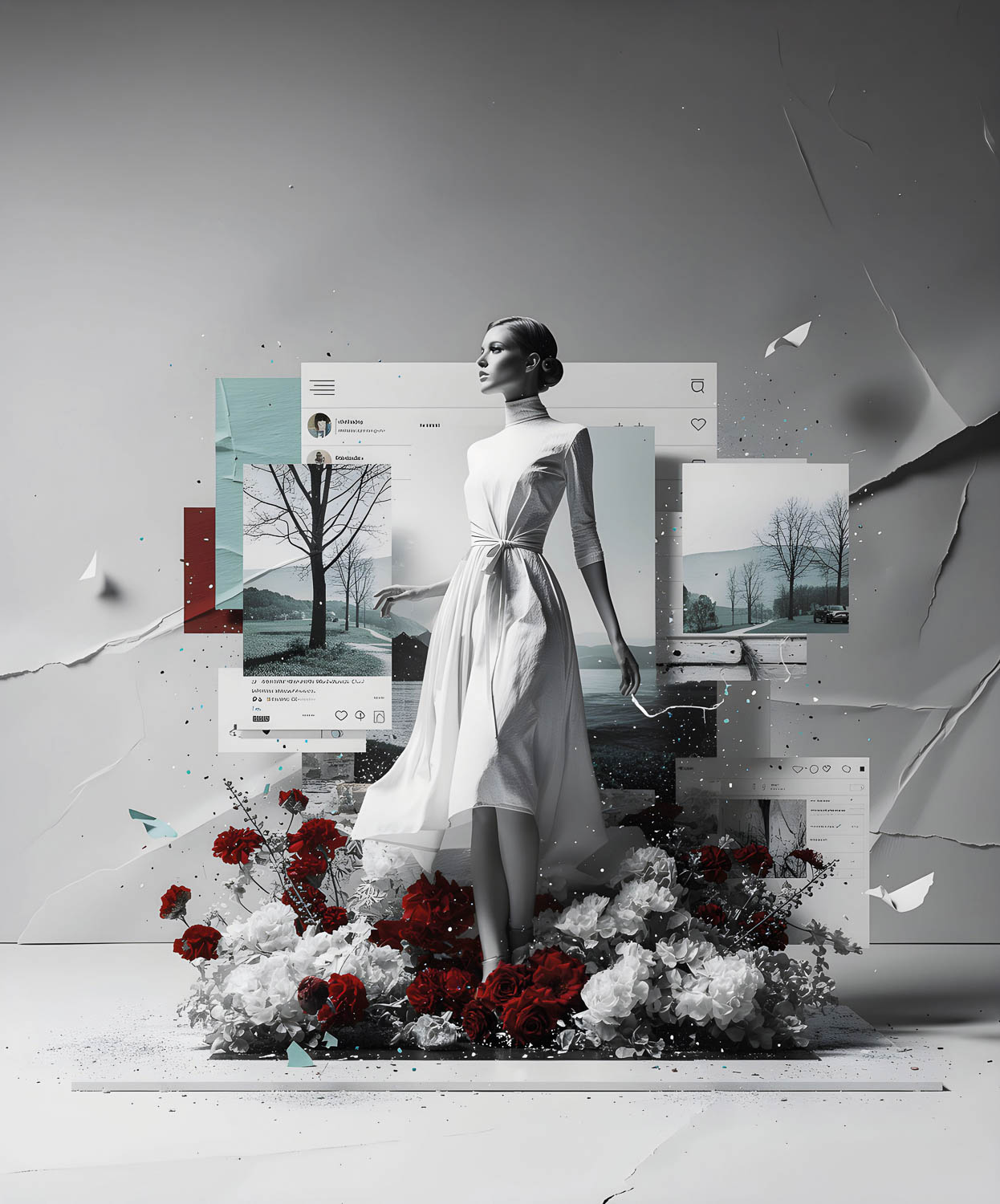
I believe mindless scrolling can simply be another form of distraction. From what, you may ask? I believe it distracts us from feeling our feelings. We avoid dealing with the black box inside us. Social media has become just another outlet – much like alcohol, drugs, busyness and extreme sports – to avoid feeling the pain of the past or the fear of the future associated with emotions such as sadness, fear, anger, shame or grief.
When we are afraid to truly feel such emotions, we numb ourselves through social media and other forms of distraction. The problem is not our feelings, but knowing how to deal with them. So we keep a lid on them. It may seem as though we have found a solution for now, but in the long run we unknowingly pay a high price with our health and happiness.
Purposeful scrolling, on the other hand, is a way to use social media through an “inside-out” approach. Then we may seek out and connect with those who are on the same wavelength for inspiration or to join a community.
DIGITAL RESILIENCE:
INFORMATION VS WISDOM
I believe recognising that most content out there is merely information that goes in one ear and out the other makes it much easier to stop mindless scrolling. I notice this in myself: a few minutes later, I often cannot tell you what I just saw. What I can tell you is how it made me feel – sometimes more upbeat, sometimes neutral, and at other times more anxious about life. How do you feel when you come off social media? Is it boosting your energy or draining it?
When content shares experiences, wisdom and scientific findings that help humanity move in a healthier direction, it stays with me, and I may even take notes. One of my favourite inspirational channels on Instagram is femalepoetsociety. I love their clips, especially those featuring Maya Angelou, as she shares her life wisdom. Dr Zach Bush is another favourite. He is a thought leader on the microbiome and its relationship to health, disease and food systems.
What both have in common is that there is no ego. It is not about them or how great they are, though they are highly accomplished in their own right. They share their wisdom to inspire others and help move humanity in a new direction.
I avoid posts where it is all about the individual, and I avoid people who use fear to promote their goods or services. I also avoid mainstream media, which, to me, is often more about attracting viewers through dramatic headlines and imagery than providing objective journalism. There are many more trustworthy sources today offering a broader range of perspectives.
Digital resilience is a choice. It reflects what matters to you. How do you want to spend the precious time life has given you? If you need to be on social media for personal or professional reasons, set aside a defined window each day and use a timer.
CONNECTION IN A DIGITAL WORLD
True connection in the digital world requires conscious choice. How much of your life takes place online? How many of your meetings are virtual and how many happen in person, both at work and in your private life?
I make it a point to meet friends in person because felt human connection matters to me. Nothing can replace the human touch felt in giving and receiving a heartfelt hug from someone we care about.
In a digital world, a leader’s primary focus must remain the human being. While it may be easier to send a thank-you email, taking the time to walk over to someone and say it in person makes them feel seen, felt and heard. If they are in a different location, pick up the phone. Whenever someone feels seen, felt and heard, they are more likely to repeat that behaviour with others. To ensure human connection does not wither in the hustle and bustle of digital work life, put it on the agenda in team meetings.
IN CLOSING
Ask yourself before you go onto social media next time: why am I really doing this right now? Is it a temporary escape? A short break to clear my mind? Am I bored?
What begins as a short distraction can quickly turn into 15 minutes of pure consumption. Even at only four times a week, that amounts to at least one hour a week, or four hours a month. That may not seem like much, but what could you have done with that time instead? Spoken to a friend, called a family member, gone for a walk, relaxed, or enjoyed a good book?
What would you do if someone gave you the gift of time?