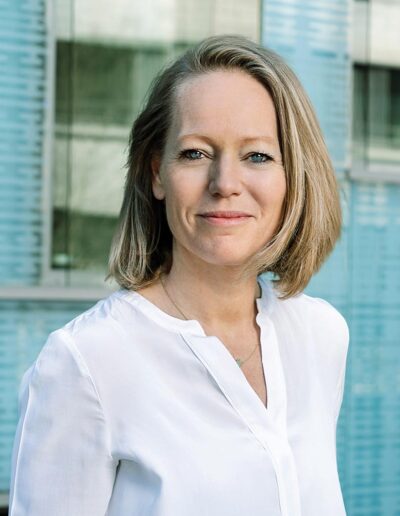



As a child, she was abused by her own father and close family members. In this exclusive interview, therapist, human scientist, and coach Dr Deanna Vansickel courageously shares what it takes to face one’s past, the power of inner healing, and what it means to reclaim one’s space and value after severe trauma.
Ladies Drive: Dear Deanna, you recently published your first book. It tells the story of your own childhood, marked by abuse within your closest family circle. The book moved me deeply because it is a true story – your story. What was your intention with it?
Dr Deanna Vansickel: Thank you so much for sharing that with me. It means a lot to know my story touched you. I didn’t write this book to process the child abuse I endured – that work has been ongoing for as long as I can remember. What I chose was to return to the voice of my younger self, with full awareness, so I could give expression to what so many survivors still carry in silence: the ache, the confusion, the resilience. Because I believed that if I could tell the truth clearly enough, victims of child abuse might finally feel something most of us rarely do – not analysed, not pitied, but seen.
What contribution can your book make to processing such terrible trauma?
Thank you for that question – and for recognising what the heart of the book is really about. I hope it offers a way to process trauma – not by endlessly analysing it or staying trapped in the past, but by helping people remember who they are beneath what happened. The book invites readers to explore the idea that healing isn’t just about what we’ve endured – it’s about reclaiming the self that existed before the harm. The process of becoming is a journey back to the truth we carried before birth – that original sense of worth, innocence, and connection we brought into the world.
I believe every life holds purpose – and part of that purpose is to uncover who we truly are, why we’re here, and who we’re becoming in the process. So many women I’ve worked with don’t realise how strong and resilient they are. They’ve mastered survival, but no one ever told them they’re allowed to move beyond it.
This book offers language, validation, and a kind of emotional mirror – so they can begin to see themselves clearly and let go of the lies they’ve carried for too long. Ultimately, I hope it helps people feel less alone and gives them a gentle yet steady nudge towards freedom – not just from trauma, but into who they were always meant to be.
What gave you the strength and courage to pour your story into a book – and why now?
For a long time, I thought I had to have all the answers – to be fulfilled, healed, and complete – before writing my story. But I came to understand that it’s not about arriving; it’s about the journey of becoming. So I asked myself: why not write the book while I’m still in motion? Why not tell the truth on my way to becoming? If I can share my story in the middle of becoming, perhaps others will feel less pressure to hide theirs. Maybe this book can be a lifeline – something that reaches into the silence and whispers, “You’re not alone.”
You were abused by your own father. This is probably the worst thing that can happen to a child. What kept you alive?
Yes, I did grow up in abuse and chaos – but somewhere deep inside, I held onto the belief that God didn’t send me to this planet to be abused. I remember a soft whisper within me: “What is being done to you will not become you.” That whisper carried me. It became the thread I followed – the quiet truth I kept chasing. I’ve spent my life trying to uncover who I truly am beneath everything that tried to tell me otherwise.
How did you do that?
My first goal was simple: to get out of the gutter – out of the place I lived, out of the abuse. I left at sixteen. I worked, I studied, I built a life opposite to the one I was born into. Around that time, I was told I’d never have children because of severe endometriosis. Strangely, that made sense to me. I thought God was protecting the world from me – and me from the world. I knew the statistics: people who are abused often go on to abuse. It felt as though God was stepping in – to prevent harm, to break the cycle before it could begin. But then, at twenty-nine, I became pregnant. I was terrified. After the shock, I knew – with every part of my being – that if I was going to be a mother, I had to give it everything I had. I was determined to break the cycle. And I did. My daughters are now strong, independent, beautiful young women.
My third goal in life was to write this book. I believe every hardship we overcome prepares us for the next chapter of our calling. With this book, I want to reach those quietly bleeding inside – the ones who don’t even realise they’re carrying unworthiness because they’re too busy surviving. I want to help them find the truth of their lives, to expose the lies they’ve been taught about themselves and the world around them. The goal isn’t perfection – it’s finding their essence, their truth. That’s where the gold lies. That’s where the diamond lives – the core of what makes them who they really are. And once they find it, they’ll see: they were never broken. They’ve been becoming all along.
What is the difference between survival and real healing?
The difference is subtle on the outside – but radically shifting on the inside. Survival means getting by: pushing through, doing whatever it takes to make it through the day. But it’s exhausting; it keeps you in constant fight mode. Healing means transformation. It’s when your essence – your truest sense of self – begins to rise to the surface. From that place, you’re no longer merely reacting; you’re responding. You’re choosing – intentionally and consciously.
For me, healing has meant shedding the heavy layers I was never meant to carry. It’s a continuous unfolding, a deepening, a becoming. And I’m still working on it. I haven’t arrived – because I don’t think we ever truly do. If we believe we’ve arrived, we’re probably already dead. Life is movement. Healing is a lifelong invitation to keep becoming the person we were before the world told us otherwise – the one we were before we were born.
What can help people move from survival to transformation and not break down from post-traumatic stress disorder?
You’ve named something so real – something delicate, yet deeply necessary. In my own life, and through years of studying psychology and working with people in pain, I’ve come to believe this: survival is a brilliant response to unbearable things. But transformation – true healing – begins when we realise we no longer have to live in constant fight, flight, or freeze mode. And that shift out of survival starts with understanding, not judgment.
From a psychological perspective, it helped me to learn that trauma responses are not flaws; they are the nervous system’s way of protecting us. That awareness alone can soften the shame and self-blame that often come with trauma.
From there, safe connection is essential. I’ve seen – personally and professionally – that healing is deeply relational. We move toward transformation through honest, compassionate relationships: with ourselves, with trusted friends, therapists, coaches, or mentors who can hold space without trying to fix us. They don’t see us as broken. We don’t need to be “rescued”; we need to feel safe, seen, and respected.
Somatic tools such as EMDR, along with my faith and relationship with God and Jesus, have played a significant role in my healing. I see God as my Father and Jesus as my brother – someone who actually showed me how to walk through this world with love. And when I haven’t shown that same mercy to myself, I try to lean into theirs. It helps me soften.
Books like The Body Keeps the Score by Dr Bessel van der Kolk and The Myth of Normal and When the Body Says No by Dr Gabor Maté have also been deeply validating. They helped me understand that trauma doesn’t just live in the mind – it’s stored in the body. And if it’s stored there, that’s where it must be met and released. I’ve learned that symptoms aren’t meant to be silenced; they’re signals – our stories asking to breathe. We don’t have to keep hiding from them.
Ultimately, transformation invites us to come home to ourselves – to begin treating ourselves with the compassion we may never have received. That doesn’t mean we get it right every day, but it does mean taking responsibility for ending the cycle of self-abandonment. The shift from survival to transformation isn’t quick, but it is possible. It starts with truth, continues with support, and deepens with every small act of self-trust.
In your book you talk a lot about God, spirituality, and healing. Are you a religious person?
No, not in the traditional sense. I’m not religious – but I am a Christian, which means I have a personal relationship with God and Jesus. I believe God is love, and Jesus showed how to love. They’ve shaped every part of my journey. Some people use words like Spirit, Universe, or Source. For me, it’s not vague or distant – it’s personal. I often feel that love most clearly in nature or when I read the Bible.
Staying connected to God and Jesus keeps me anchored inside. Without that connection, I’d feel as if I were drifting – and that’s dangerous, because when we lose our own clear aim, we can easily get swept up in the noise of the world and stop thinking for ourselves. I believe we must renew our minds daily toward what is good and pure. From that place of clarity, we can better discern and choose what’s right for our next move. To me, spirituality is about returning to the truth that God already placed within us. It’s what opens us to wisdom, love, and a grounded sense of self. That’s very different from religion as I’ve often experienced it – where it can become more about rules and shame than grace and healing.
The God I know doesn’t shrink us. He restores us.
You talk a lot about your inner voice in your book. Since then, I’ve been trying to hear mine too.
Wow – you are? That’s amazing. The fact that the book moved you to pause and listen for your own beautiful voice – that’s powerful. Thank you for sharing that with me. For me, being terribly abused at a young age, I sometimes wonder if that’s why I could hear my inner voice so early – because I had nothing else. That voice was my lifeline. But over the years, I lost touch with it too. Life got louder – responsibilities, expectations, survival – it all drowned it out. I’ve had to return to it again and again. The truth is, it’s always there; it never leaves me – only I stray from it. Rediscovering it hasn’t always been easy, but every time I do, it brings me back to who I really am.
How do you discover the inner voice?
Such a great question, Claudia. I believe that in order to discover your inner voice, you have to create space to hear yourself beneath the noise – fear, doubt, pressure, expectations. It’s not easy in a world that constantly demands our attention, but it’s possible – and powerful. The how is different for everyone.
For me, stillness opens the door. Whether through prayer, journalling, meditation, time in nature, or quietly reading my Bible – the key is to slow down enough to listen. For some, that sense of connection may come through movement – like yoga, walking, running, or horseback riding. For others, it arises in solitude or through a sacred connection to whatever they believe in.
What matters for everyone is making room. When you quiet the noise of the world, you begin to hear your own voice – that steady, loving, wise presence within, guiding you toward your next right move. Sometimes it brings answers, sometimes comfort. But tuning into it isn’t about performance; it’s about presence. It’s not intellectual – it’s felt. The more you practise listening, the more you begin to trust that voice. And that trust becomes a compass – not just for healing, but for living.
We women in particular torpedo ourselves and often have the feeling that we are not good enough. Is there a psychological antidote to this that you can recommend?
You’ve named something almost universal – and yet still deeply personal. So many women carry that quiet ache of not feeling “enough.” If there’s a psychological antidote, I believe it begins with self-compassion and honest reflection. Not the kind that coddles or avoids – but the kind that tells the truth with love. Above all, I would say to women: you are not alone.
The world needs to hear more from the very women who doubt themselves – because they carry a wisdom that only comes from deep reflection. And reflection requires a quiet kind of courage most people never even realise they possess. Self-doubt does not mean that you are broken. It often means you’ve spent your life showing up more for others than for yourself. That’s not weakness; that’s insight – ready to be reclaimed and used for becoming.
That kind of depth creates emotional intelligence. It fuels growth and nurtures truth. The world desperately needs more women who have paused long enough to be honest with themselves – who are organically humble, willing to grow, challenge the lies they’ve been told, and rise anyway.
We don’t have to earn our worth – not through titles, not through relationships, not by following someone else’s rules. Worth is not something the world gives us, so it can’t take it away. When we are honest and present, we can’t go wrong. We don’t need to shout to be seen. We simply need to stand – fully – in who we already are.
This requires managers who can look behind the facades. What can trauma-sensitive leadership look like in a modern business world?
That’s such an important question – because leadership today can’t ignore the human beneath the role. I see this constantly in my executive coaching: people bring their whole selves to work – their past experiences, pain, and patterns. When leaders are aware of that, everything shifts. It doesn’t mean turning managers into therapists, but it does mean equipping them with core coaching skills and the emotional intelligence to lead with awareness, self-regulation, and relational insight – to meet people where they are, not just where we expect them to be.
Trauma-sensitive leadership creates psychological safety. It builds environments where people feel seen, heard, and valued – not just for their output, but for who they are. That kind of culture fosters innovation, trust, and honest collaboration.
A healthy error culture doesn’t criticise or blame – it reflects, learns, and moves forward. We grow through awareness, not shame. When leaders understand trauma, they don’t just manage performance – they nurture growth and address the real root of problems. It’s not about unpacking someone’s entire life story; it’s about shifting perspective. Instead of asking, “What’s wrong with this person or situation?” we begin asking, “What might have happened that led to this?”.
That question applies just as much to a product failure, a team breakdown, or a communication miss as it does to personal struggles. It moves us from reacting to symptoms to addressing root causes – and that’s where real change and better strategy happen.
Your book was published on 20 June of this year. What kind of legacy do you want to leave behind?
I want women to know they are not what was done to them. Their story doesn’t have to end in survival or self-doubt – it can unfold into meaning, voice, and becoming. My legacy is also for my daughters – and for young women everywhere. I want them to know, deep in their bones, that they don’t have to choose between strength and softness. I want them to trust their inner knowing and live from it. Not to prove anything, but because it’s theirs – their life, their voice, their truth – meant to be lived fully, not managed or minimised. Truth is always stronger than fear. And the girl we were before the world told us who to be is still in there – waiting to be remembered.
Which idea from your book would you like to anchor in the hearts of the readers?
It’s hard to choose just one – because there are so many layers. But if I had to name a single idea I hope stays with people, it would be this: stop pretending and start becoming.
That phrase doesn’t appear until the very end of the book, but everything leads to it. I write a lot about the split between our inner and outer selves – and how, especially through trauma, we learn to chameleon our way through life. To adapt. To survive.
But chameleoning is survival. Becoming is sovereignty.
I love your book cover. When you talk to your inner child today, what do you say to her?
Such a tender question. I would look at her and say: I love you. I’m so sorry I didn’t always listen when you were trying to teach me – to help me make sense of our pain. You were so wise, offering truth and guidance I couldn’t always hear. But look at us now – we’re still here, together. Your sweet, fierce soul carried us through more than anyone will ever know. Thank you for protecting our heart – that’s what saved us from bitterness and from losing the ability to love. Because of you, we’ve learned to love – even in the face of what wasn’t loving. Our heart will always lead us to what’s right, what matters, what brings light.
You are a force for good. And let’s remember: when we feel lost, let’s listen for the voice inside. It’s always there. It’s always our way home.
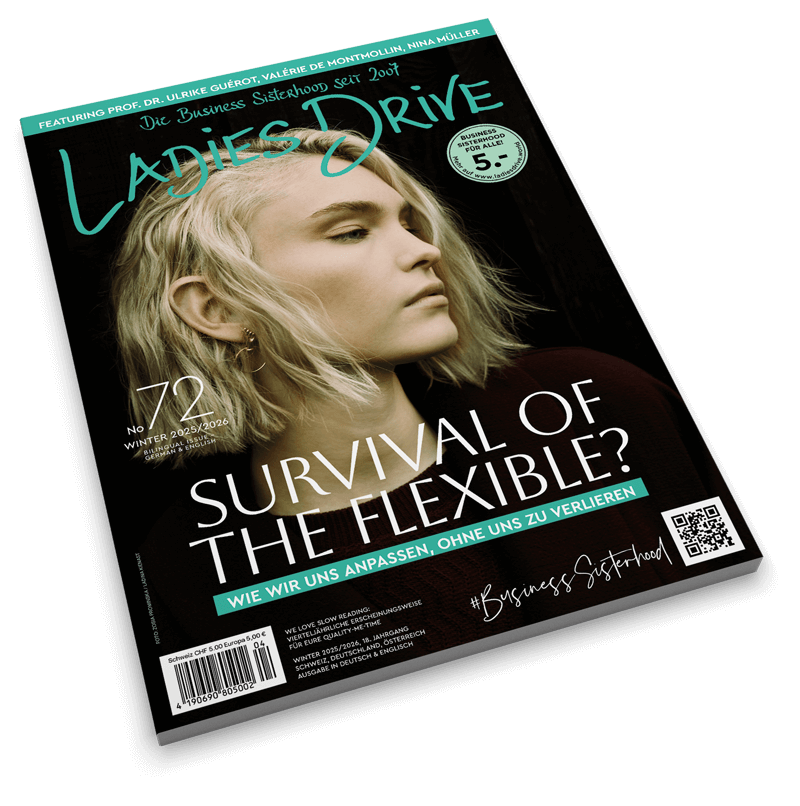
How can we create emotional or professional security in times of radical cuts and changes?
Goodness – tough question. I’ll give it my best shot. For me, and it’s still a learning curve, true security doesn’t come from titles, plans, or bank accounts. It comes from self-trust – and, for me, from God and Jesus. For others, it may come from whatever source they place their hope in. In times of radical change, the most valuable thing we have is our connection – to ourselves, to those we love, and to the Source beyond us. Everything else is shifting sand.
Of course, we should live smart: save when we can, be honest, show up, do what we say we’ll do. But at the end of the day, we don’t control most of what’s happening out there. What we can do is lead ourselves well and be kind to others along the way. Self-leadership is the one investment that always pays off.
For me, it means learning to pause, tell myself the truth, and choose my next right move from that place – not fear, not people-pleasing, not ambition for ambition’s sake. Just truth. When I do that – when I move from a grounded place – I don’t have to contort myself to keep the peace or push so hard I fall apart. I can move forward with integrity without breaking myself – or breaking others along the way.
We also need flexibility – but not the kind that bends with every wind. Flexibility without a rooted sense of self creates chaos. We need both: something steady and something that bends. Without both, I can either cling too tightly to the status quo or spin into that familiar black-and-white thinking that pulls me off centre.
When we show up with both self-leadership and integrity, we build trust – with ourselves and with others. And that trust? That’s the real currency of leadership – and what makes relationships strong, lasting, and real.