
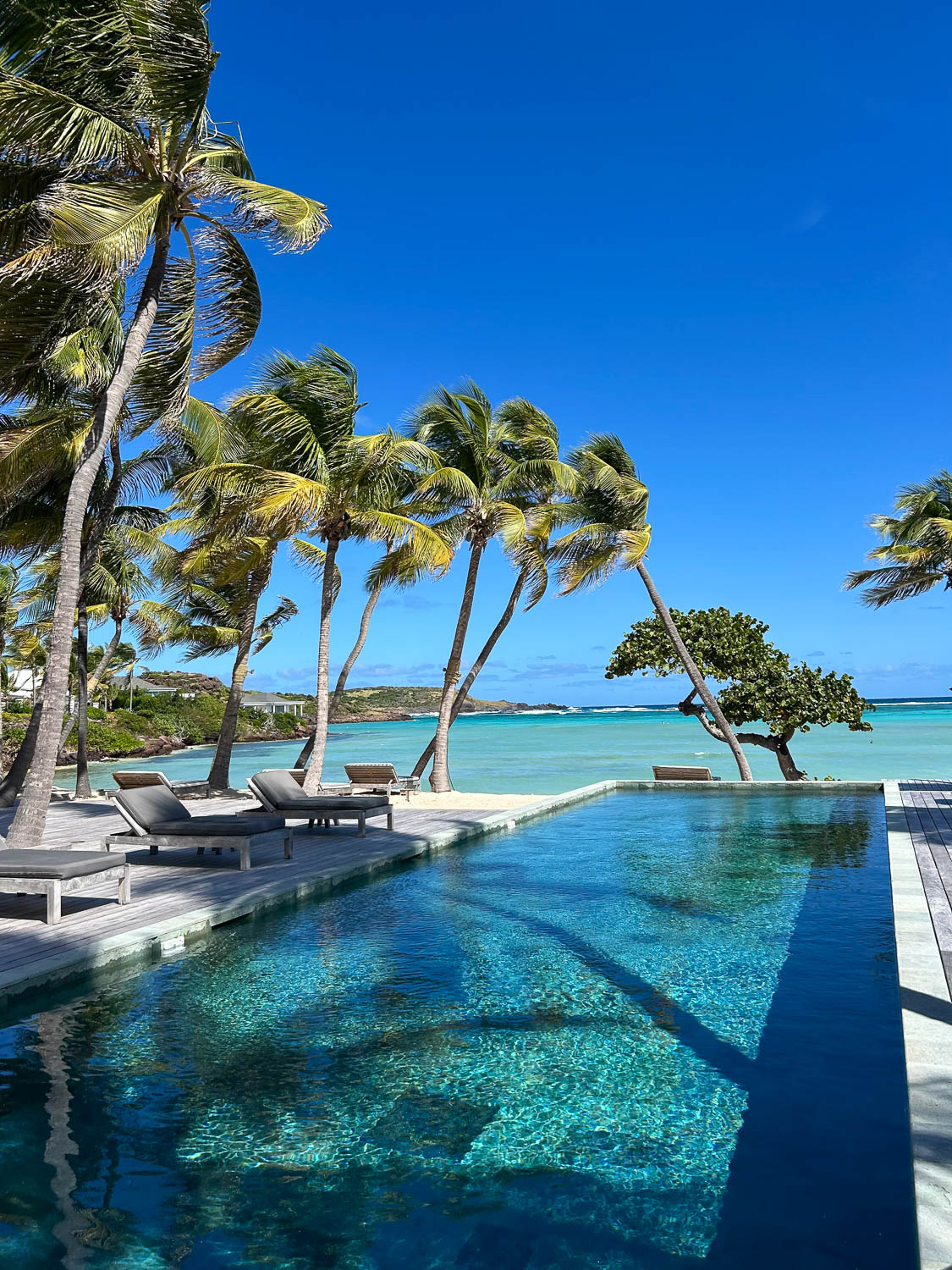


St. Barths, better known as Saint-Barthélemy, spans just 21 km², but has received worldwide recognition due to its French sophistication and Caribbean flair. Every New Year’s Eve, a global spotlight shines on the petite island, drawn by the dense concentration of billionaires, superyachts and a celebrity crowd parading along the beaches. Jeff Bezos, Heidi Klum and Leonardo DiCaprio are practically locals during this time. Despite its seasonal popularity, the island holds an alluring beauty all year round. (With its pearl-white beaches, clear turquoise waters, swaying palm trees, and lively capital, Gustavia, understandably so). In comparison to destinations such as the Maldives and Seychelles, which have a strong resort-only focus, St.Barths offers far more when it comes to restaurants, shopping and nightlife. The beauty of the island lies in its contrasting sides, which is nowhere more evident than in its hotel landscape.

The easiest way to reach St. Barths is from its Dutch neighbour Sint Maarten – a scenic 15-minute flight is all it takes. (Or, for those not comfortable flying in small planes, a one-hour ferry makes a suitable alternative.) With its overseas flights and challenging logistics, vacationing in St. Barths does come with a price tag. At the same time, this is precisely what keeps mass tourism away. Over the past 15 years, however, St. Barths has become increasingly visible on global travel itineraries. The hospitality scene has remarkably picked up the pace, yet some hotels do still hold on to the island’s true spirit. Le Sereno was one of the first hotels to open on St. Barths in the 1970s and has since acted as a long-standing counterpoint to the upbeat arrivals. Le Sereno, as the name already hints, offers a serene refuge for those who value privacy over proximity to the “scene”.
Low-profile, barefoot luxury
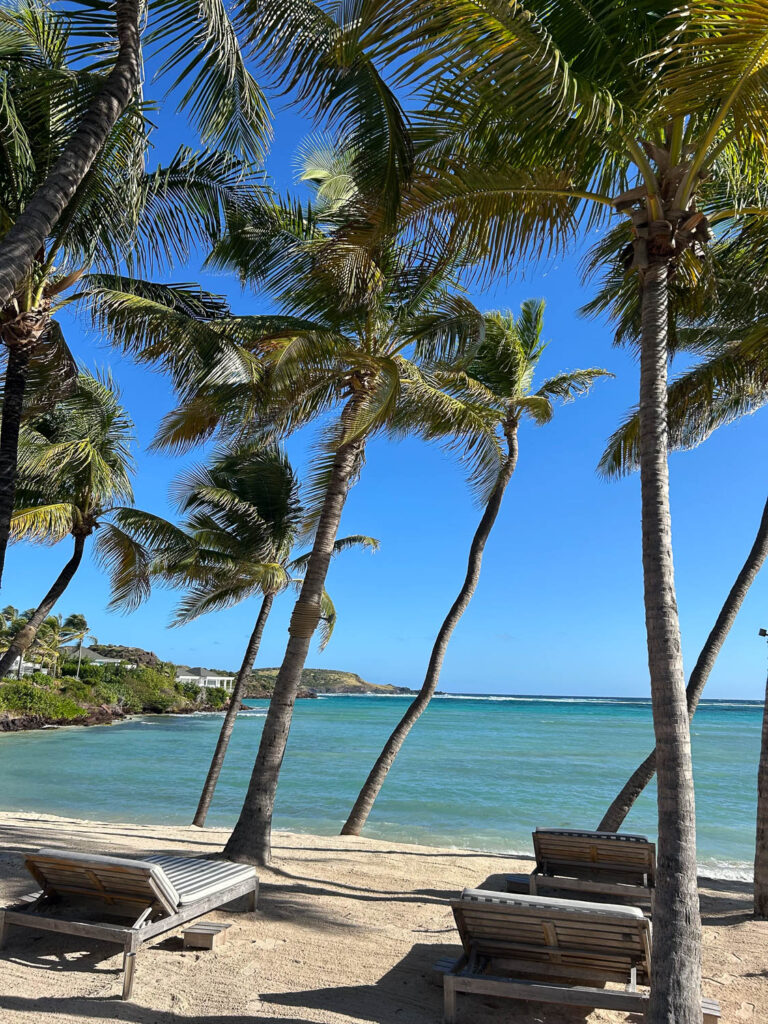
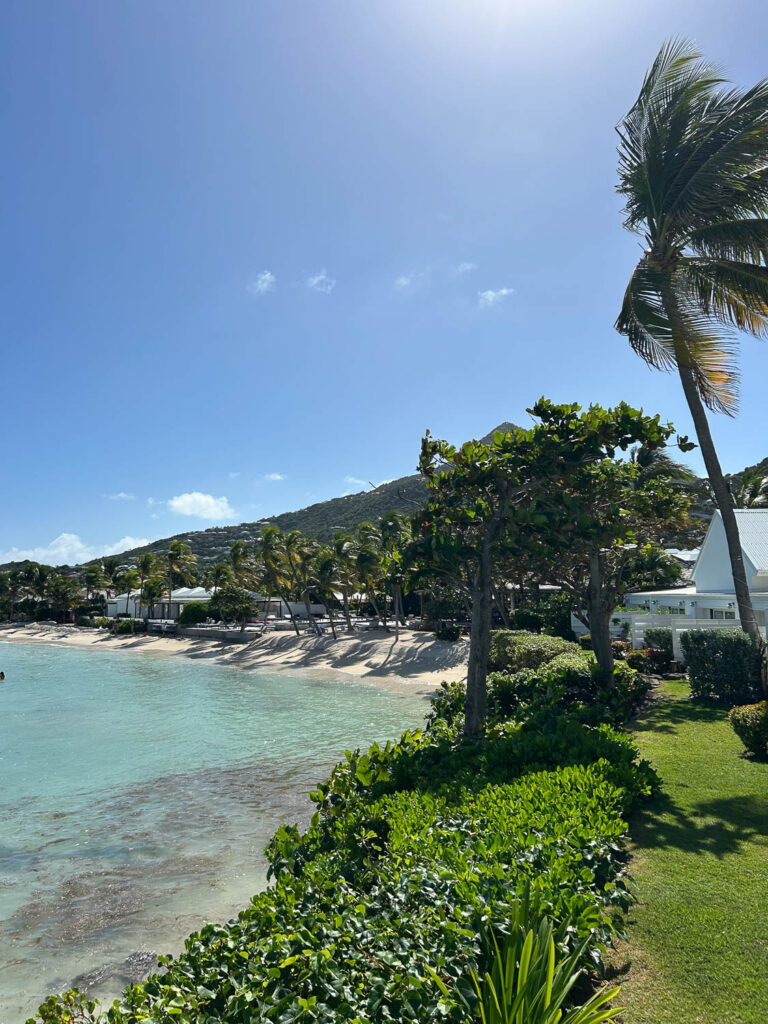
Located northeast of the island in the secluded bay of Grand Cul du Sac, Le Sereno welcomes travellers who seek understated luxury. The family-run boutique hotel offers its guests an idyllic beach retreat and a low-profile base for those who prefer to relax and unwind in private. Its location is what makes it unique: set on a private beach and home to St. Barth’s only marine reserve. Here, breakfast is served under the palm trees with your feet in the sand, while overlooking the peaceful azure lagoon. Now and then, a sea turtle pops up to take a breath of fresh air. This is barefoot luxury at its finest.
In contrast to the ‘seen and be seen’ culture in some of the other parts of the island, Le Sereno feels far more discreet. The hotel lends itself to an ‘if you know, you know’ philosophy, which proves to be one of the key drivers behind its success. “Our guests are often creative entrepreneurs, artists, and high-level corporate leaders—individuals who spend their lives in the spotlight and come to us to disappear,” says General Manager Carlos de la Barra.
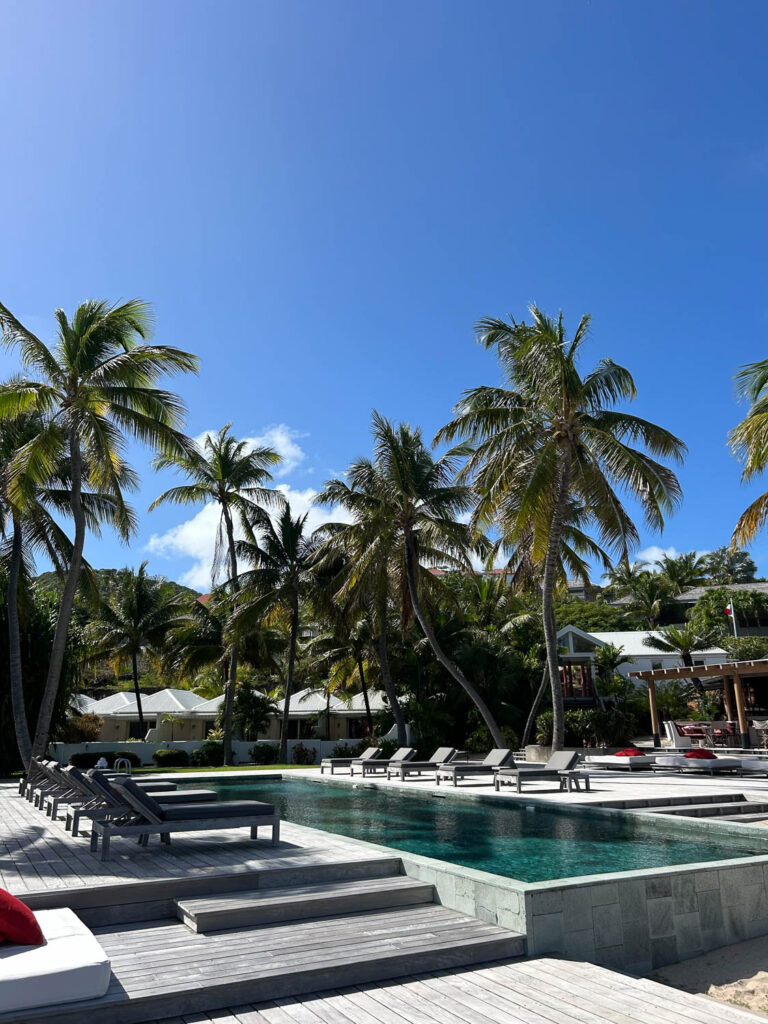
The hotel is laid out around the infinity pool and its Al Mare restaurant, which serves delicious Italian food with a Caribbean twist. The culinary direction draws on the experience of the team from Il Sereno in Lake Como, whose restaurant holds a Michelin star.
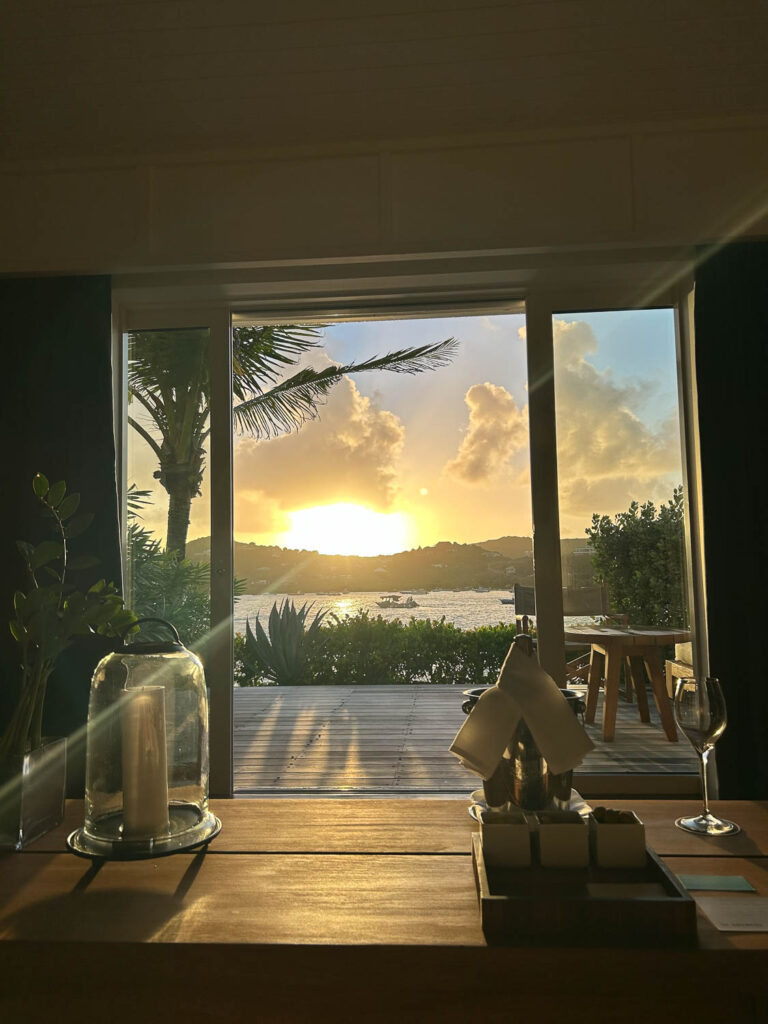
The spacious suites of Le Sereno have a clear Caribbean character, with minimalist interiors, dark wooden floors and white panelled walls. Each room opens onto a private terrace and garden, overlooking either the pool or the lagoon. A noticeable design detail is the shape of the palm trees around the pool, which lean slightly towards one another rather than standing upright, giving the property a laid-back look and feel.
Marine life and sustainability
Its lagoon-front position makes waking up at Le Sereno instantly idyllic. Unlike other parts of the island, the bay of Grand Cul du Sac is shallow, allowing guests to walk straight into the water — ideal for snorkelling and paddleboarding. A natural coral reef barrier protects the bay from the open ocean, creating a calm, sheltered marine environment. Go swimming here, and you may find yourself sharing the water with one of the sea turtles that call this bay home. The lagoon is one of the few places on the island where swimming with sea turtles is possible. Sea turtles remain an endangered species, and rising water temperatures continue to challenge their natural breeding process. To help protect the sea turtles, Le Sereno actively supports conservation efforts in the bay, contributing to a noticeable improvement in local marine conditions over the past decade. “In partnership with the local territorial agency, we helped designate Grand Cul-de-Sac as a marine reserve, where all forms of fishing are prohibited,” says Georgios Perret, Marketing Manager at Le Sereno. “The combination of algae, coral and a protective reef barrier creates an ideal environment for sea turtles to thrive.”

Hospitality and service
Beyond its location, it is the level of hospitality that sets Le Sereno apart from other luxury hotels in the Caribbean. The staff here is attentive but never intrusive, guided by an intuitive understanding of when to engage and when to step back. Rather than following scripts, the team reads the room and adapts naturally to different guests. You might recognise some of the team from Lake Como, as staff rotate seasonally between the two properties, bringing an Italian approach to hospitality to the Caribbean.
General Manager Carlos joined the team recently but sees little reason to change what already works. He emphasises that hiring is based primarily on attitude, with the belief that technical skills can be taught, but genuine care cannot. As he explains, “Hospitality is a mindset, not just a set of tasks.We look for people who don’t just follow a manual, but who instinctively find a better way to say yes to a guest.”
This warm, proactive mindset became apparent upon my arrival at Le Sereno. After two delayed flights, my luggage had not made it to the island. It was, inevitably, the one time I had chosen to travel without a carry-on, leaving me standing at the Air France desk in Sint Maarten with nothing but a faux-fur jacket. It was not an ideal start. By the time I reached the hotel, however, the situation had already been picked up by the team. A fresh vanity set was arranged, along with a pair of flip-flops and an iPhone charger. A team member even drove to the pharmacy to pick up ibuprofen I had left behind in my suitcase. In many corporate-run hotels, such personal requests are limited by policy restrictions; here, the response was practical and human. It is in unforeseen moments like these that luxury reveals itself: the ability to arrive, switch off, and not have to manage problems yourself.